David Deutsch thinks the worst thing our species has ever done to the environment was turning away from nuclear power.
He's the Oxford physicist who described the universal quantum computer in 1985, which is why people call him the father of quantum computing. He's just spent an hour on Chris Williamson's podcast talking about AI, school, discipline and being wrong. I agree with all of it, so most of this post is me repeating him.
AI
Williamson asked what people are most unnecessarily pessimistic about right now. Deutsch said AI doom, and maybe climate catastrophe.
He thinks both make the same mistake of treating a problem as a barrier. We could all die, sure, but that's been true every day humans have existed. We could always have been hit by a comet, and the chances of that have only dropped recently because we've started working out how to divert them. People used to worry the air would run out of oxygen. The AI fears could come true, he says. It's just arbitrary to pick that one out of everything that could go wrong, and in a slightly different universe we'd be worrying about something else.
He also doesn't think large language models lead to anything that could take over the world. Going by Karl Popper's theory of knowledge, LLMs have nothing in them that's capable of creativity. He's impressed by them. A few years ago he'd have guessed this kind of functionality was another 50 years away. But nobody who built them claimed to have worked out what creativity is. They set out to build a model that could speak English properly, and they did. Expecting AGI to follow is a bet on more compute. Nobody has come up with a better theory of knowledge that says it'll work.
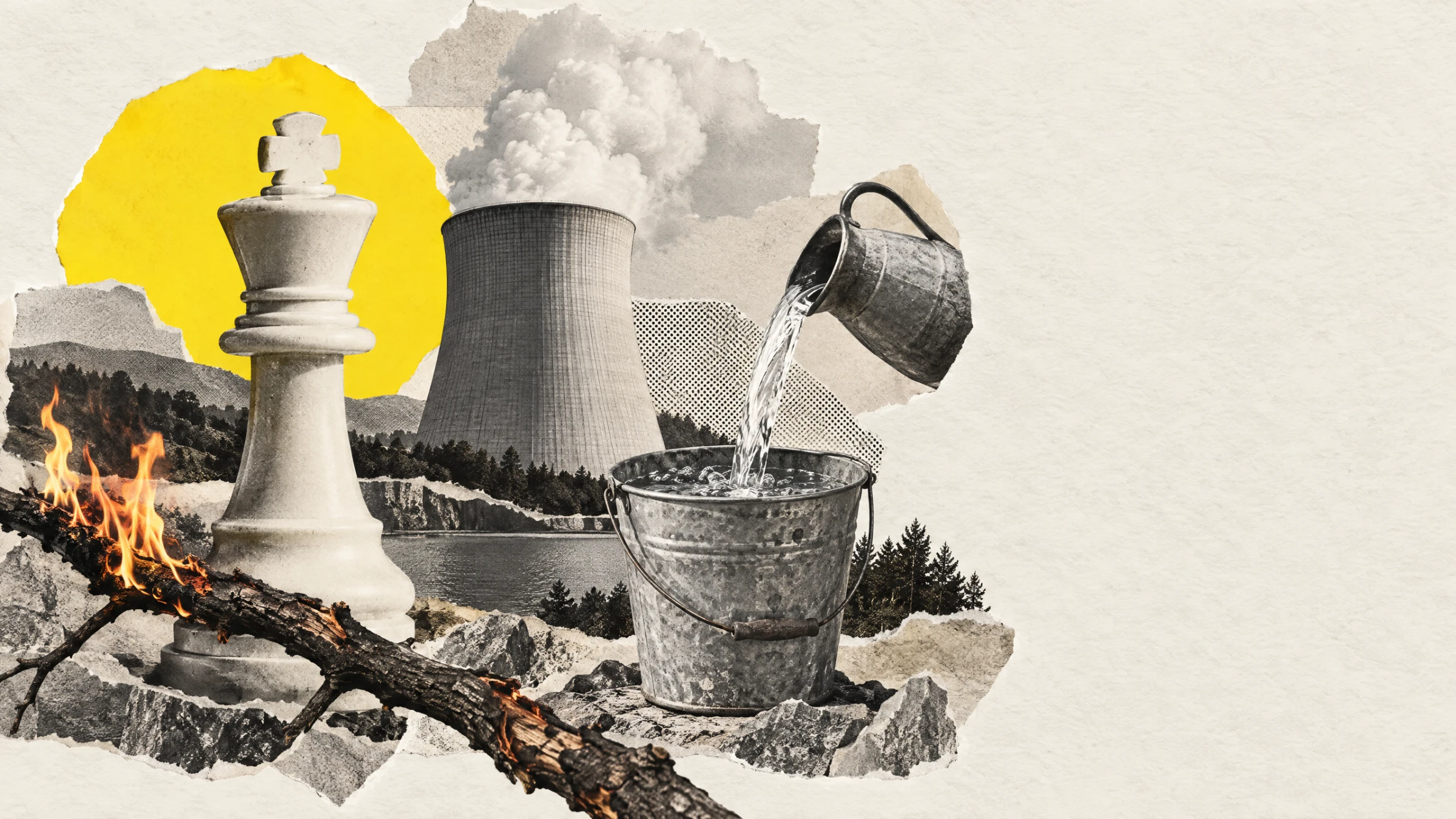
He used chess to explain the difference. When an engine beats a grandmaster, they're doing completely different kinds of computation. The grandmaster does about a millionth as much and still plays at a very high level. A grandmaster can write a book about their greatest games and how they won them. Ask an engine how it won and it gives you move sequences.
Ask an engine how it won
If you do this move, then that will happen. And if that happens, this will happen. If that happens, this will happen. If that happens, this will happen. If that happens, this will happen. If that happens, this will happen. If that happens, this will happen.
Ask a grandmaster
"I thought that if I give up this pawn, it's going to create a weakness on the g file."
Computation per game
The grandmaster also gets caught out. Something can look like it'll work until "five moves later, the bastard found a way out of it". We know how to write a chess engine but not how to write a grandmaster.
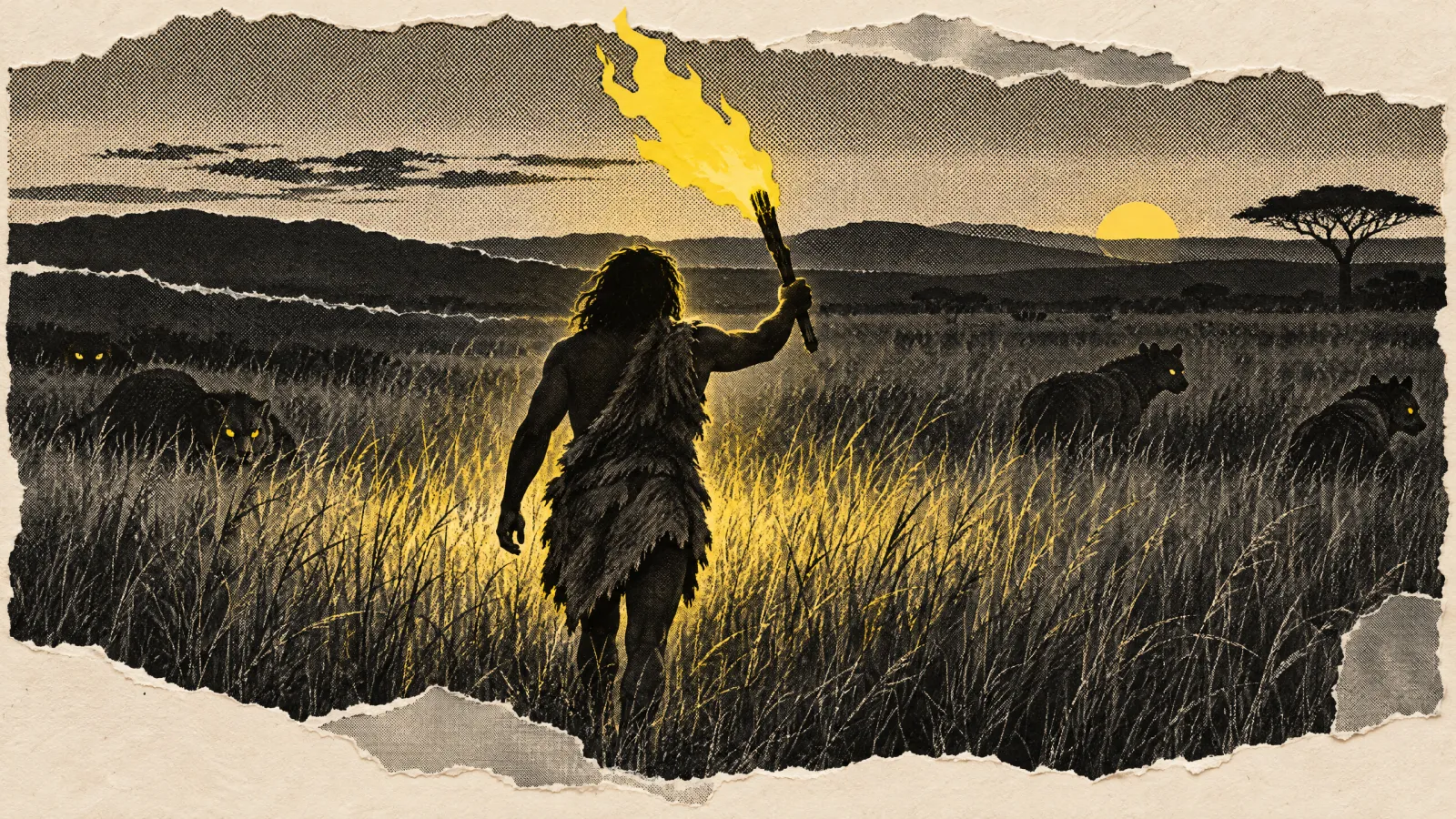
His example of human creativity is the first person who carried a burning branch home from a wildfire, so that predators would run from them instead of the other way round. Nobody had seen that done before. It isn't optimising for a fixed goal like checkmate, and you can't give a computer a criterion for interesting.
Nuclear power
Williamson read out a resignation post from a researcher leaving Anthropic, saying neither OpenAI nor Anthropic was acting responsibly. Deutsch's reply:
"I'm old and I remember when people were saying this about nuclear reactors."
David Deutsch
They said it so loudly and so often that we stopped building reactors, and he thinks that caused the climate problem we have now. People picked one of many bad things that could happen, frightened everyone, and the drastic action that followed had catastrophic results. If we turn away from AI because of a similar fiction, he thinks that would be a big catastrophe too. He started to say bigger, then corrected himself to "not as big".
Education
Deutsch calls education "the last holdout of pre-Enlightenment theories of knowledge".
Popper called it the bucket theory of the mind. Knowledge is a fluid, the student is an empty bucket and the teacher pours it in. When it goes wrong, which is most of the time, the bucket gets the blame. It leaked, or it didn't want the fluid. It can't be the fluid's fault because the fluid is knowledge.
Gets the blame
The bucket. It leaked, or it didn't want the fluid.
Never gets the blame
The fluid, because by definition it's knowledge.
So we measure how well the bucket has been filled, with exams, and everyone ends up spending more time on what can be measured and less on what can't. There's no test where you score 93% for explaining your chess moves, and he thinks most of what matters in education is like that.
His example is very British. Someone spends the whole summer forcing themselves through GCSE maths, scrapes a pass and starts forgetting all of it the next day.
"In a rational society, that would never happen. If that happened even once, it would be headline in the newspaper and heads would roll."David Deutsch
He'd drop compulsory subjects, and compulsory education altogether. The internet makes that practical. You can email almost anyone famous and have a reasonable chance of a reply, even if the reply is "read my book".
"Access to somebody can be very valuable where compulsory subordination to that very same person would be very bad for you."
David Deutsch
It ties back to how he opened the conversation. You can't download knowledge like a computer. You guess what the other person means, get it wrong and test your guesses. So whenever someone doesn't understand you, "it's your fault, not theirs. Unless they're a golden retriever."
Discipline
Williamson asked about forcing yourself to do things, which is about as popular an idea as there is right now. Deutsch says the same words get used for opposite things.
The mountaineer
Freezing, and every part of him wants to go back down to the warm. That's the climb he chose, and he only got good enough to reach the top because he loves it.
The GCSE maths summer
Revising every day of the holidays, scraping a pass and forgetting it all the next day.
Both get described as forcing yourself.
For the jobs you can't avoid, like taking the bins out, he says get it over with and then improve it. Buy a better bin. Live somewhere the walk to the bin is shorter. Or find the part you can enjoy, like fresh air after a day at the computer. "Reducing the thing you don't like is always good."
That's roughly what I meant in an earlier post when I said I'd like less of the working day spent on work nobody enjoys.
He also says people only notice the effort when the hobby has a good reputation. Ten hours a day of chess or martial arts looks like dedication. Ten hours a day of video games is psychologically almost the same thing, and people try to apply discipline in the other direction.
Being wrong
When he says optimism he means something narrower than being cheerful. "It's more of an explanation for failure than a prophecy of success." When something goes wrong, it's because we hadn't yet created the knowledge to make it go right.
He also explained why pessimism passes for sophistication. In a novel, rescuing a character you've set up to die is hard to write well, in the same way solving a problem in real life is hard. Pulling a rescue out of a hat is a cheat. So is killing everyone off like Hamlet. Anyone can write either ending.
On certainty he goes with Popper, who said we're all alike in our infinite ignorance. Every adult has been proved wrong about something they were sure of, so feeling certain tells you nothing about whether you're right. Neither does who's talking. Someone ignorant or even malevolent can be right about one particular thing. If your enemy says he's coming to kill you, you might want to believe him over the friend who says his bark is worse than his bite.
You don't have to work everything out from first principles. When he buys a sandwich he relies on a theory of how sandwich chains are run and regulated. But "a small fact can destroy a large reputation". If he read on the morning of a flight that the airline's engineers had been doing shoddy work, he might not fly, even if the risk was still tiny.
He says X should be the perfect place to throw out conjectures and have them criticised, but it isn't, so he stopped long ago. He's finishing a book on the Fermi paradox and has written it as a science fiction story set in another universe, so he doesn't have to answer for the differences with ours. He also thinks you should choose when to expose an idea to criticism. Do it too early and you can kill a line of thought that's wrong but would have led somewhere right.
His two published books, and the three he's writing now.
Alongside that book he's writing a quantum theory textbook with Sam Kuipers and Chiara Marletto, and a third book after The Fabric of Reality and The Beginning of Infinity, tentatively called Irrationality. He also has a day job.