Success
[PRO SERVICES / SECURITY & GOVERNANCE]

LLM Visibility
Audit

Ask five AI tools the same buying question and you may get five different shortlists. We record where your company appears, the wording around it, the pages used as evidence and any errors that could cost you consideration.

HOW IT WORKS
1

Ask buyer questions

2

Record model answers

3

Check the sources

You see where your company appears and why.

61.8%

CHATGPT SHARE, MAY 2026

74 to 80%

AI OVERVIEW LINKS OUTSIDE ORGANIC TOP TEN

4.4x

VISITOR VALUE REPORTED VS ORGANIC

Sources: First Page Sage, May 2026 generative AI chatbot market share; Semrush, 200,000-keyword AI Overview study, July 2025; Semrush AI search traffic study, July 2025.

[WHY CHECK]

A buyer can rule you out before visiting your site

A procurement lead can ask for the best CRM for a 12-person consultancy, or a finance director can ask who handles fractional CFO work in Manchester. The answer may contain a shortlist, a comparison and enough detail to make the next decision.

If your company is missing, described with old information or backed by an unreliable source, that buyer has little reason to look you up.

The answers also vary. We collect enough responses to show a pattern and keep the evidence behind every finding.

ONE BUYING QUESTION

  • Real wording from a buyer or procurement team
  • Repeated across the agreed engines
  • Run more than once to capture variation
  • Engine, date and mode recorded

THE AUDIT RECORD

  • Brands named and how often they appear
  • Exact descriptions and factual errors
  • Pages cited as evidence
  • Website or source changes worth testing
[THE EVIDENCE]

We keep the evidence behind the score

A percentage on its own tells you very little. The audit keeps the full answers, cited pages and technical checks, so you can see why a finding exists and challenge it if you disagree.

Who gets named

For every prompt, we record whether your business appears and which agreed competitors appear with it. Repeated runs show the difference between a brand that appears often and one that surfaced by chance.

The exact wording

We keep the description, praise, criticism and caveats in context. Wrong pricing, old products or the wrong leadership team go into an error register with the original response.

The sources behind the answer

We trace the pages the engine cites, including your own site and independent sources. That shows which claims have support, which pages are stale and where a competitor has better evidence.

Access and source freshness

We check robots.txt, CDN blocks, index status, internal links, visible text and structured data. Googlebot access matters for Google AI features. Google-Extended controls some other training and grounding uses, so we report it separately instead of treating it as an AI Overview switch.

[HOW THE AUDIT RUNS]

We start with the questions your buyers ask

Your sales team knows the comparisons, objections and category language that come up before a deal. We turn those into a test set, agree the competitors and record the engines and settings used.

You own the prompt set, report and source data. There is no required monthly dashboard. You can rerun the test later or ask us to do it.

DISCUSS THE SCOPE
01

Set the test

We build branded, category, problem-led and comparison prompts with your team. A typical audit covers 60 to 120 prompts, although the right number depends on your product range, markets and competitor set.

02

Capture the answers

We run the prompts more than once across the agreed services. Standard coverage can include ChatGPT with web search, Google AI Overviews or AI Mode where they appear, Perplexity, Claude and Gemini. We keep each full response.

03

Follow the evidence

Citations and site checks help explain a result. We look for stale pages, weak independent evidence, blocked crawlers, missing text and structured data that disagrees with the page a person sees.

04

Rank the work

Each recommendation includes its evidence, effort, dependencies and our confidence in it. If you want Vu to make agreed changes, we quote for that work separately.

[WHAT YOU RECEIVE]

What the audit includes

You receive one clear report and the source data behind it. The findings are ready for a leadership discussion, while the evidence gives marketing and web teams enough detail to act.

Management brief

A short account of where you appear, how that compares with the agreed competitors, what the engines say and which findings deserve attention first.

Evidence register

The exact answers, mentions, descriptions, errors and cited pages. Each item retains the prompt, engine, mode and date, so the finding can be checked.

Prioritised work list

Recommended source, content and technical changes, each tied back to the evidence. We separate work with a clear case from longer bets whose outcome is less certain.

Rerun pack

The prompt set, scoring method and captured data in usable formats. A later run can use the same test design, with any model or product changes noted rather than hidden.

[WORKING WITH SEO]

Use the audit alongside your SEO work

Google says the usual Search requirements and good SEO practice still apply to AI Overviews and AI Mode. A page needs to be indexed and eligible for a snippet before Google can use it as a supporting link.

There is still a gap. Semrush's study of 200,000 keywords found that AI Overview links overlapped with the organic top ten by only about 20 to 26 per cent.

We give your SEO or web team the affected pages, captured answers and access checks. They can use the evidence without changing the rest of their search plan.

Organic search record

Queries, rankings, impressions, clicks and the pages that earned them.

AI answer record

Prompts, named brands, descriptions, cited sources and variation between runs.

Shared work

Crawler access, clear source material, internal links and accurate structured data can support both records.

[WHEN IT HELPS]

A useful audit needs a real buying question

This works best when buyers compare you with named alternatives and someone on your team can judge whether the answers are fair.

Worth testing

  • Buyers compare your company with a known set of alternatives
  • Sales hears the same category, problem or competitor questions
  • AI answers already appear in deals or send visits to your site
  • Your team can check product facts and give us access to the right sources

Start somewhere else when

  • Your own product, pricing or company information is out of date
  • The business has not agreed which category and competitors matter
  • You need a guaranteed ranking or a guaranteed date for a change
  • You only need an always-on dashboard and nobody to investigate the findings
[QUESTIONS]

Questions to settle before the audit

Q.01

Does the audit prove a sales return?

No visibility audit can promise revenue. Semrush reported that an average visitor from a non-Google AI search source was worth 4.4 times an average traditional organic visitor, based on conversion rate. That is their aggregate finding, not a forecast for your business. We measure whether you appear during consideration and give you evidence for deciding what to change.

Q.02

Why run the same prompt more than once?

Answers can change between runs because models sample their output and some services retrieve fresh web results. Repetition shows how often a brand appears and stops one unusual answer from carrying the whole finding. The report states the sample size for each test.

Q.03

Do we need an /llms.txt file?

Google says sites do not need a new AI file or special schema to appear in AI Overviews or AI Mode. An llms.txt file is optional, and we will not present it as a ranking fix. Crawler access, index eligibility, clear text and accurate sources come first.

Q.04

Which engines do you cover?

Standard coverage can include ChatGPT with web search, Google AI Overviews or AI Mode where they appear, Perplexity, Claude and Gemini. We agree the final list before the work starts and can add another service when your buyers have a reason to use it.

Q.05

What happens to factual errors?

We record each error with the prompt, full response, engine and date. We then look for a source that may explain it. The recommended action might be an update to your own site, a correction to an independent source or a request for removal. We do not promise that an engine will accept a correction.

Q.06

Do we have to keep paying for monitoring?

No. You own the report, prompt set and captured data. Your team can rerun the test, or you can ask us to repeat it. Any work to make the recommended changes is agreed and quoted separately.

Q.07

When will a change appear in the answers?

The engine must recrawl, reindex or refresh the source it uses. Timing varies by service and page, and Google says recrawling alone can take from several days to several months. We state which dependency applies to each recommendation and avoid promising a date we cannot control.

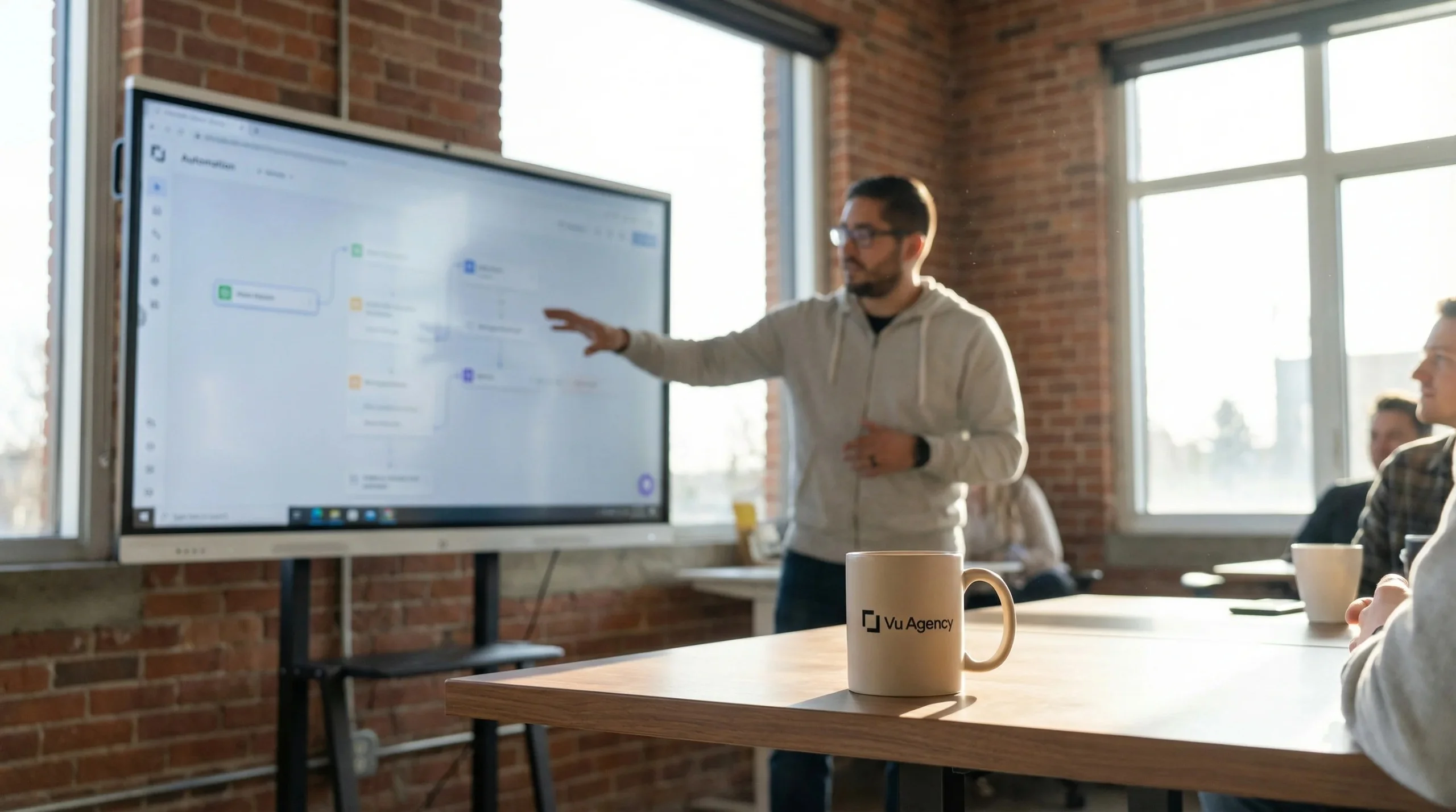
Vu Agency working session

Book an LLM visibility audit

Tell us the category, markets and competitors that matter. We will run a small sample around one buying question and explain what a full audit would add before you commission it.

[MORE PRO SERVICES]

More from Security & Governance

Every Pro Service page covers what it is, who it fits and how to start. The full list is in the footer below.

Message us on WhatsApp