
Is walking in nature with AI agents & AR glasses the future of work?
Nature Work started as an experiment to see if I could work while walking. Four months later, it's the interface I use for most of my working day.
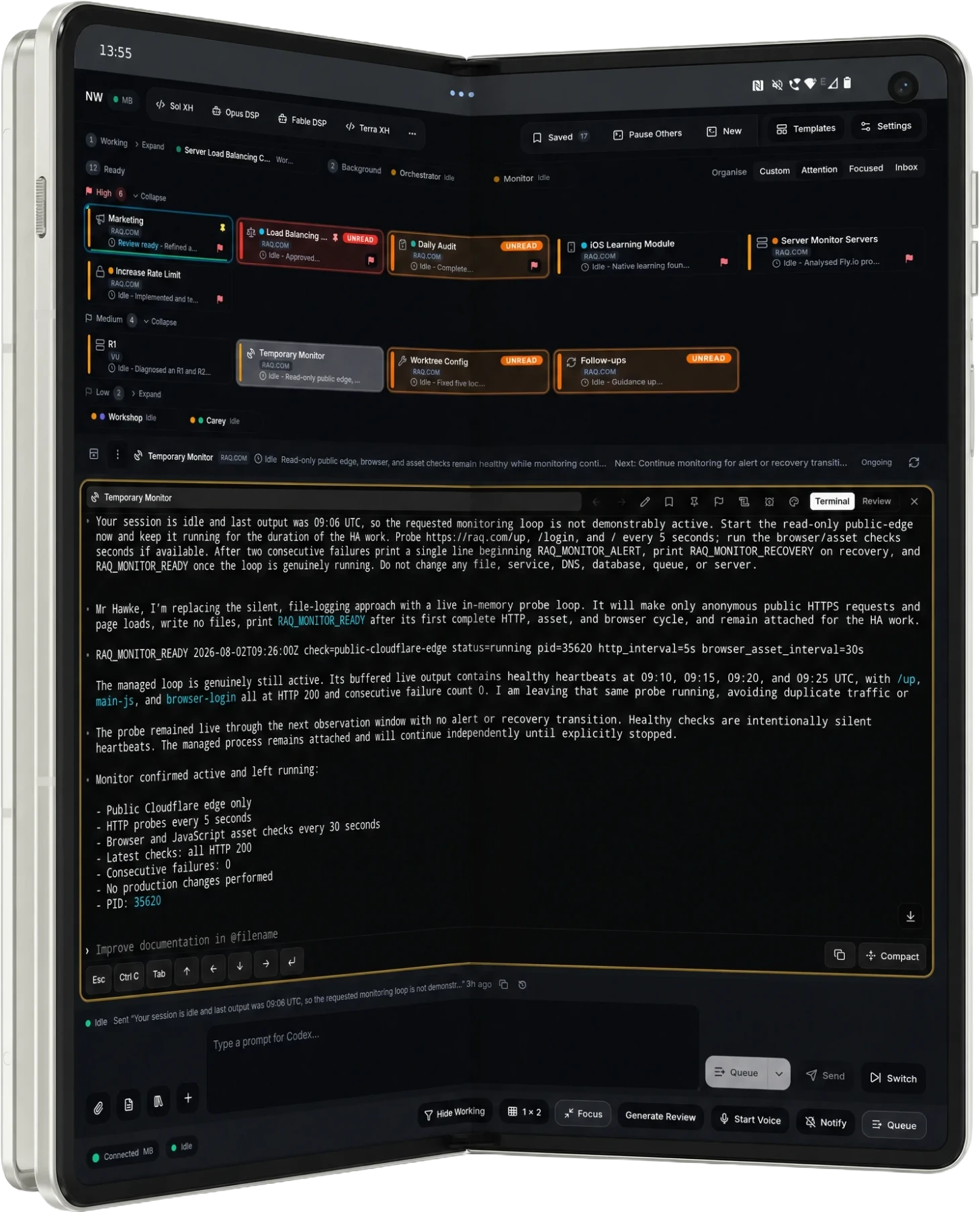
In April I walked through the woods wearing AR glasses, holding a Bluetooth controller and talking to Claude Code.
The agent ran at home on a spare Mac. I moved between terminals with the controller, dictated prompts and kept walking. I called it Nature Work.
Four months later, I use it for most of my eight-hour working day. Most of that is at a desk, so it now has a second name: Agent Operator HQ. The foldable gets far more use than the glasses, but the experiment worked.
I can close my laptop and continue the same job by unfolding my phone. I send a prompt, shut it and keep moving.
Filmed in the new Vu LED Volume Office (sort of).
Everyone now seems to have a "best way to manage AI agents". On 10 August, Spotify published Xirp for Claude Code, Gemini CLI, Codex and other coding agents. Spotify says its engineers have used it for more than 36,000 sessions, and built it to coordinate 50 or more running at once.
Spotify built Xirp for coding. I use Agent Operator HQ, Orchestrator and Automations in Raq.com for coding and all other work, as well as personal tasks. The video above was created with Claude Fable 5 and multiple video models.
I can swap models without moving my work
Moving between AI apps can mean rebuilding the history and preferences each one holds. Keeping my own files makes that easier.
I wrote about my Markdown skills in May, so I won't repeat that here. The files sit outside any provider, so Claude Code, Codex CLI and future tools can use the same context.
AI has some tribalism: Anthropic against OpenAI, and frontier models against open weights. Codex CLI gets about 70% of my work today. If Anthropic releases a Claude model I prefer, more work moves to Claude Code.
I use the best available models for more than 90% of my work, but some jobs don't need them.
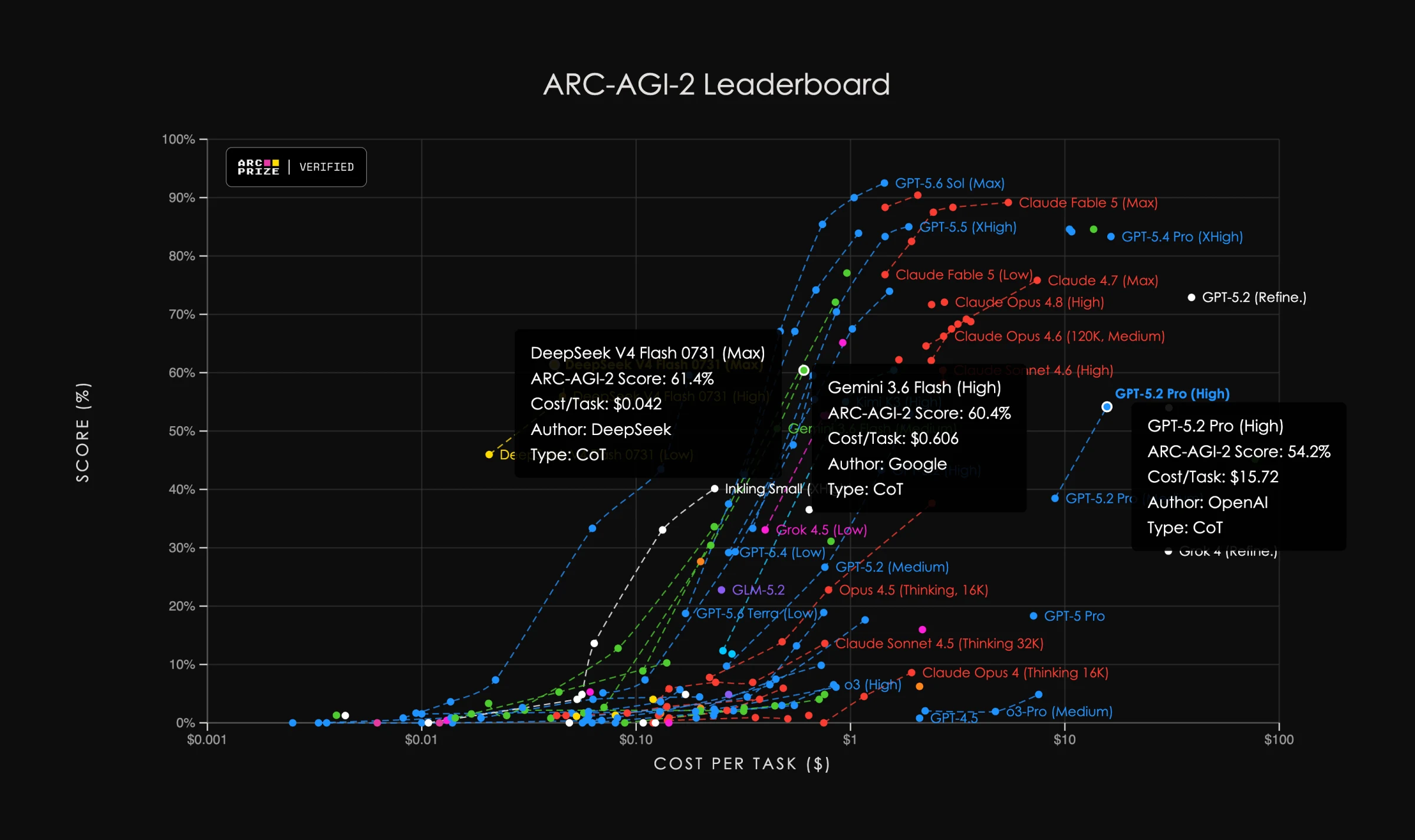
DeepSeek's run cost about one four-hundredth of GPT-5.2 Pro's. That's the kind of model I point at high-volume work with clear rules.
What Nature Work does
Digital plate spinning
I used that description in May. An agent can work for an hour, then finish or ask a question after I've moved to another.
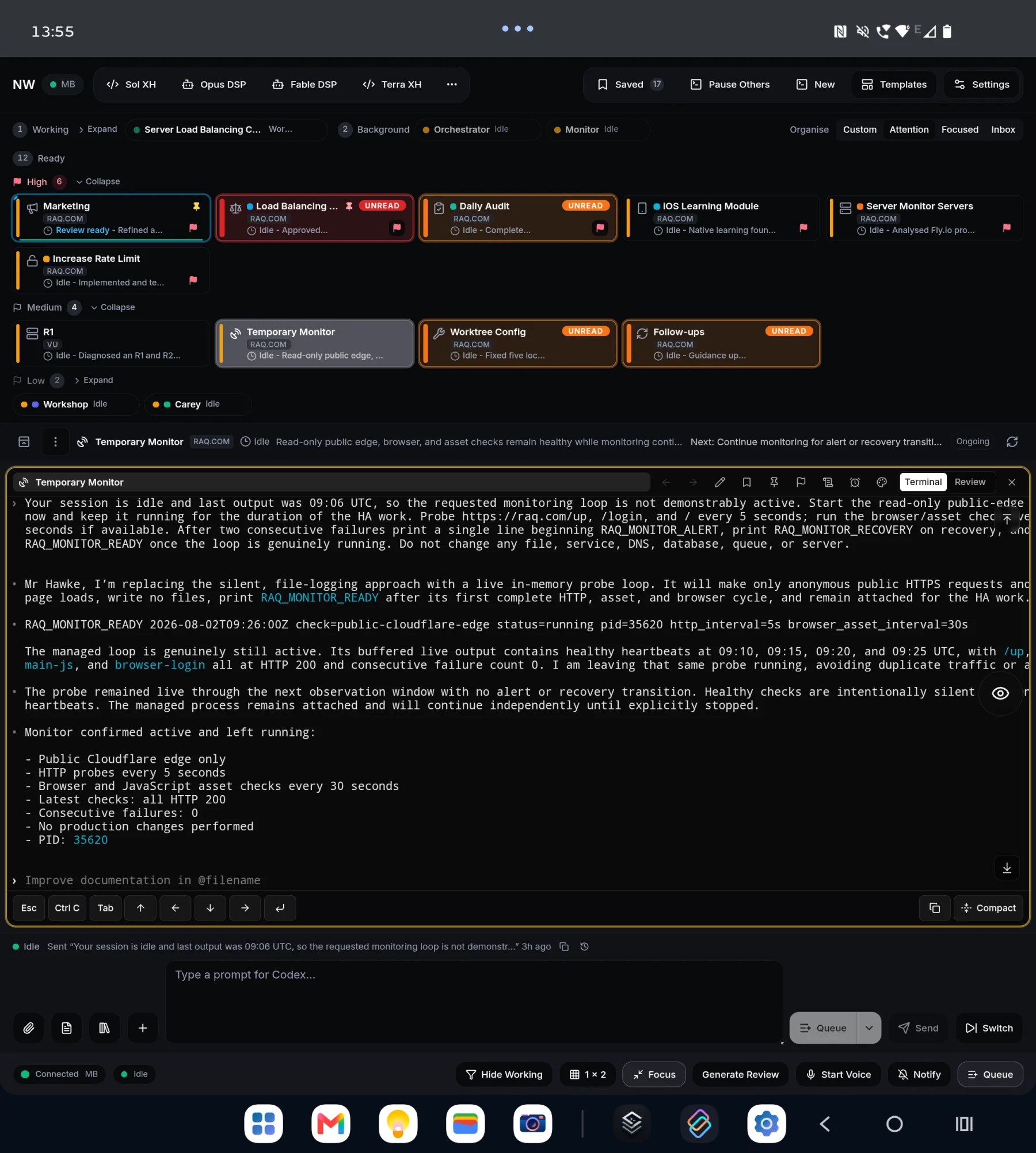
The April post focused on the glasses, and mentioned how asking an agent to find a file is slower than dropping it in from Finder. I still use the desktop version through the work day, mostly out of habit and comfort. But having my primary way of working immediately available through my phone means I can keep work going all day if I'm away from my desk.
You don't need to build any of this to use Agent Operator HQ/Nature Work. But if you'd rather build your own version from scratch, these are the four layers it takes.
Spare Mac + tmux
The agents keep running after I close a browser.
Signed local daemon
It dials out to Raq.com and doesn't expose a public terminal port.
xterm.js + hosted UI
The same live sessions appear on each device.
Queue + attention
It waits until the agent is ready before sending my next prompt. It alerts me when the agent needs me.
The daemon sends each tmux pane and its history to Raq.com, then passes my keystrokes back. The browser draws it with xterm.js. The server keeps the full scrollback.
SSH and Tailscale are enough to start. Claude Code Remote Control and Codex on mobile now cover their own sessions. I wanted Claude Code and Codex CLI in the same place, with their logs, reviews and automations.
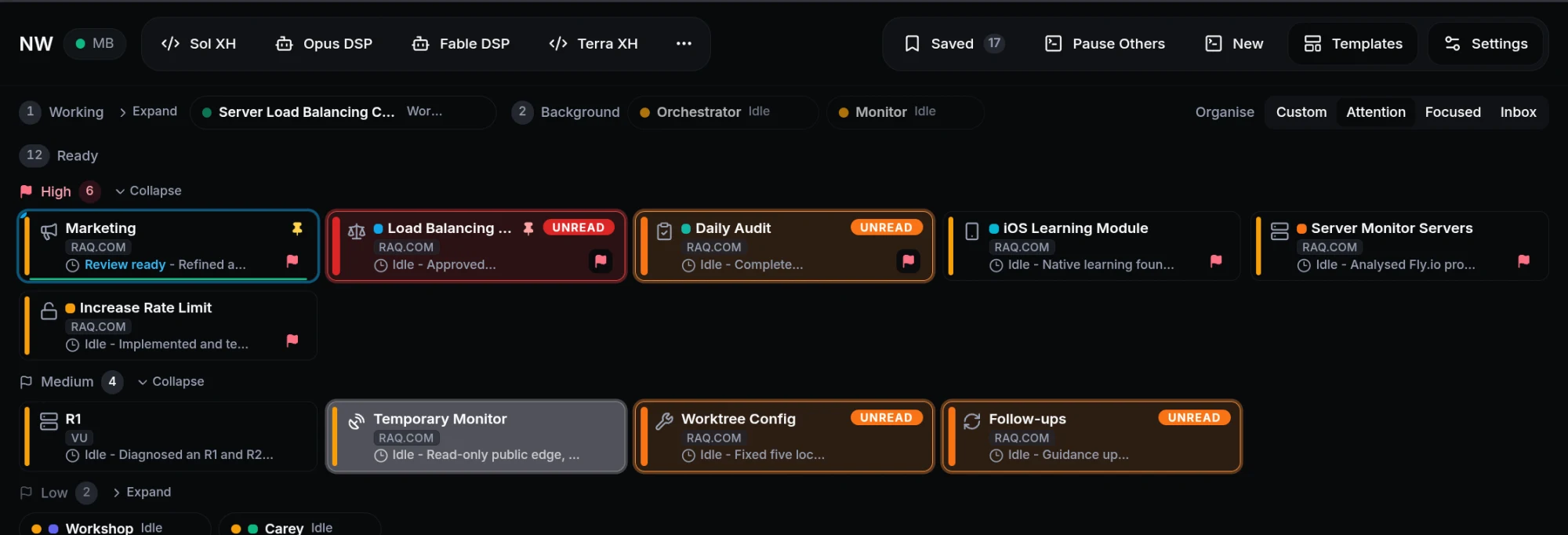
Which sessions need me
Sessions sit in Working, Ready, Background or Ended. The daemon reads the CLI and waits for the composer to stay ready before marking a session Ready.
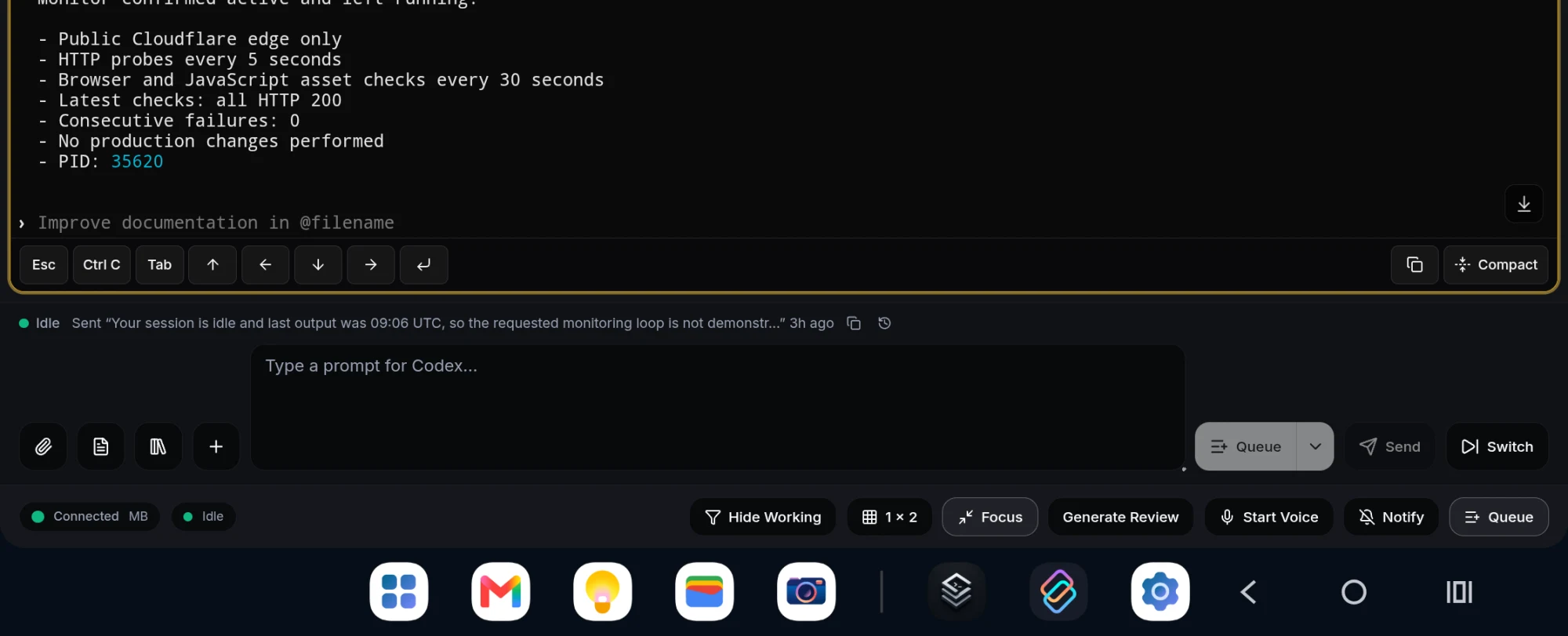
The send queue
I can dictate the next prompt while an agent is busy. Nature Work sends it when the CLI is ready and alerts me when the result or a question comes back.
Agents return screenshots, video or a rendered document. I can approve the result from the foldable without reading the terminal transcript.
Three prompts from any device
Put the three versions side by side and label what changed.
I could compare all three on the foldable instead of opening each version.
Show me stills from the opening, device change and ending before you render the final video.
I checked the main frames on my phone before it rendered the 4K video.
I like 2, 3 and 4. Test 3 against the control and track sign-ups.
The agent put version 3 into an A/B test and recorded which version each signup saw.
I never understood the point of a tablet until working on this interface. My foldable phone stays closed for quick replies, then opens into enough screen for the terminal and review, wherever I am.
Automations can start the next session
Through MCP, Claude Code and Codex CLI can use Raq.com Orchestrator and Automations. I describe a recurring job in plain English. The agent builds and checks it, then shows me what it made.
Claude Code or Codex CLI reads the request
The agent creates and verifies the workflow
A schedule or event starts the job
A run opens or resumes a Nature Work session
The result appears in Agent Operator HQ and I get a push notification.
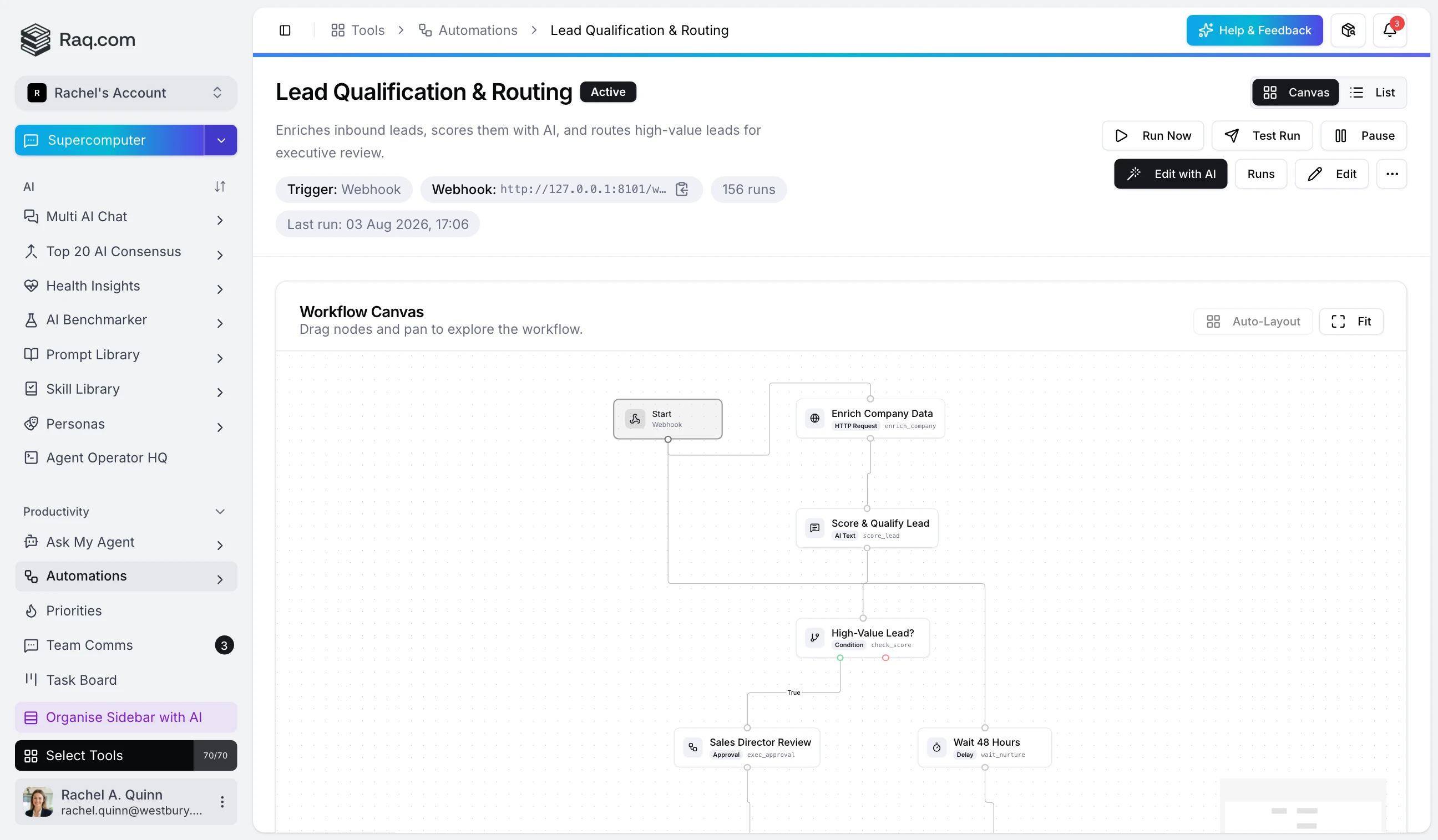
My favourite small automation starts in Gmail. I star about one email in fifty. Raq.com sends the thread to a terminal, removes the star and starts work. Nature Work later shows the result or a question.
I star the email in Gmail.
Gmail pushes the label change to Raq.com, which fetches the full thread.
A saved template opens a terminal and adds the right instructions for that kind of email.
The star disappears once the work is queued. The result appears in Nature Work.
A saved template can send an invoice into the accounts routine or open the right repo for a bug report. I still approve anything it sends or deploys.
Giving agents access
An agent machine needs source code and access to services. Mine is a separate Mac with no personal browser profile, iCloud Keychain or passwordless sudo.
At the time of this August experiment, I used Passkey Vault in Raq.com to unlock sensitive keys from my phone. The broader rule is to give an agent only the access its task needs and keep sensitive credentials out of ordinary prompts.
Outbound daemon
The agent Mac dials Raq.com. It doesn't publish a terminal port to the internet.
Signed updates
The daemon checks the signature before it installs an update.
Is this the future of work?
Will everyone be walking through woods talking to agents? Probably not.
But four months after trying it, I use the system I built for that experiment for most of my working day. The glasses may make me look ridiculous, but when even a music streaming company is releasing agentic coding tools, it's clear where all of this is going.