The toy companytrying to makehouses cheap
ZURU makes dart blasters, nappies and pink shampoo. Nick Mowbray says it has put more than $1 billion of its own money into making houses in a factory. The first ones were meant to be on sale by 2021.

ZURU Tech is the house half of the business. It writes its own design software, builds its own machines and runs a test factory in China, all paid for out of the toys and the nappies.
I’m excited about where this could go. If houses can be made in a factory like toys, the cost of living could come down. AI is getting good at 3D modelling too, so designing your own house could get easy.
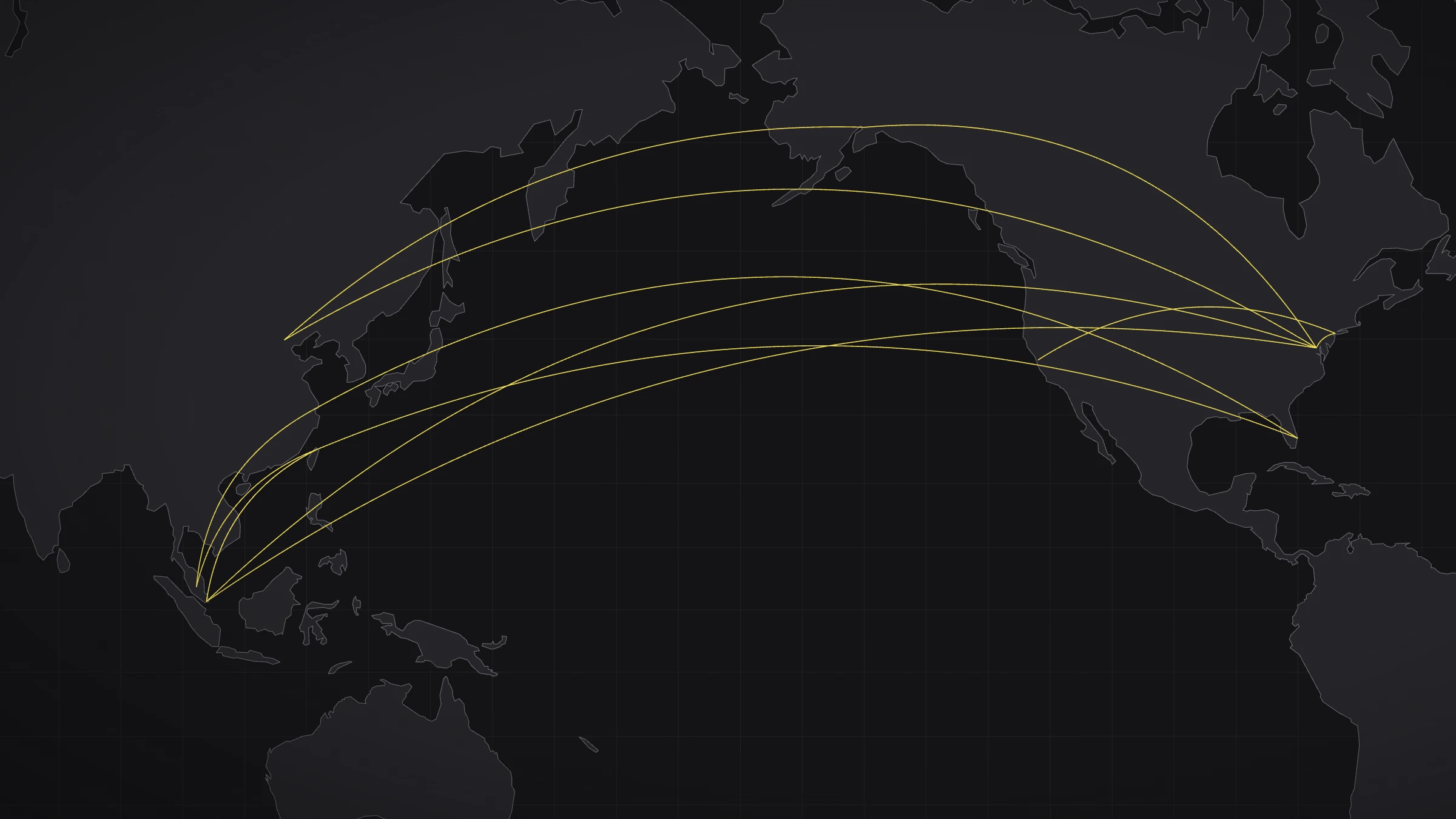
The line running through the page is what ZURU has made, in the order it made it, starting with a model hot-air balloon.
A drinks can anda plastic bag
Mat Mowbray was 12 when he won New Zealand’s national science fair with a model hot-air balloon made from a drinks can and a plastic bag. He and his younger brother Nick sold them as kits, door to door.
Their parents let them set up a factory in a barn on the family dairy farm. The rent was milking the cows and spraying weeds once a week.
Shantou2003
Nick was 18 when the brothers moved to China with a NZ$20,000 loan from their parents. He has put the rent on their first flat at US$8 a month in one interview and $20 in another. It was eight floors up with no lift.
Most of the money went on one injection-moulding machine. They built their own factory, Nick told the Foundr podcast, because they didn’t know you could pay someone else’s to make things for you.
The balloon failed the safety rules everywhere they hoped to sell it. It had a burning can underneath it.
New Yorkthe first morning
The first things they sold were copies, and Nick says so himself: a light-up frisbee and an animal-shaped coin bank, both copied from other people’s products.
He took them to the New York Toy Fair on a distributor’s stand. By his account the frisbee’s owner arrived shouting within the first hour and the coin bank’s about an hour later. Both toys were off the stand before the first morning was out.
Back in China he asked Mat whether he’d heard of patents. They ended up in two lawsuits with no money to fight them, and settled both about three years later.
David Beckhamat Walmart
Their first big deal was a football game with David Beckham’s name on it, sold to Walmart in the US. Nick told NBR in 2019 that it ended up being “kind of a disaster”.
In his 2018 Entrepreneur of the Year speech he said the hard part had been getting it made and getting shops to take it. Then it didn’t sell.
No morelosing months
Not long after, ZURU lost a couple of hundred thousand dollars in a month. Nick says they decided then that they’d never have another losing month, even if it meant firing half the company.
ZURU doesn’t publish accounts. The Herald put its profit margin at around 30% in 2024. The brothers say they’ve never borrowed beyond the loan from their parents and never taken an investor.
Their sister Anna, who ran operations for years and has since been bought out, remembers the start slightly differently: $10,000 each from their grandmother, and a bank loan for the moulding machine that their parents guaranteed.
Robo Fish2013
The toy that changed things was a plastic fish that swims when you put it in water. By 2016 ZURU had sold 35 million of them.
At the height of demand, the factory making it went bankrupt with hundreds of thousands of pieces due at Walmart and Target. Anna says they had a new factory set up within a couple of weeks.
Water balloonsand dart blasters
Bunch O Balloons fills and ties 100 water balloons in a minute. By June 2016 it had been the best-selling toy in the US for three months.
The X-Shot dart blasters are sold against Hasbro’s Nerf. Nick told NBR in 2024 that ZURU ships about 48 million dart and water blasters a year, made on lines that run from plastic granules to a packed box with nobody on them.
He told The CEO Magazine in 2022 that the robots on the toy lines came from the team working on houses.
Nappies andpink shampoo
Around 2018 ZURU went after the supermarket. It now makes Rascals and Millie Moon nappies, Monday shampoo in the pink bottle, pet food and sweets.
Nick told a New Zealand court last year that the nappies alone would bring in nearly $1bn that year. Bloomberg had toys at two-thirds of sales in 2024, with revenue heading for NZ$3bn.
The brothers top NBR’s 2026 Rich List, at an estimated NZ$20bn between them.
“We are creating the world’s first factory at scale where every part flowing through the production line is unique.”
ZURU Tech, Why build with ZURU Tech
HousesDecember 2018
The Herald’s first long piece on it said the toy company planned to sell factory-made homes for under half the usual cost, and to be selling them around the world by 2021. The project was already said to be 11 years old.
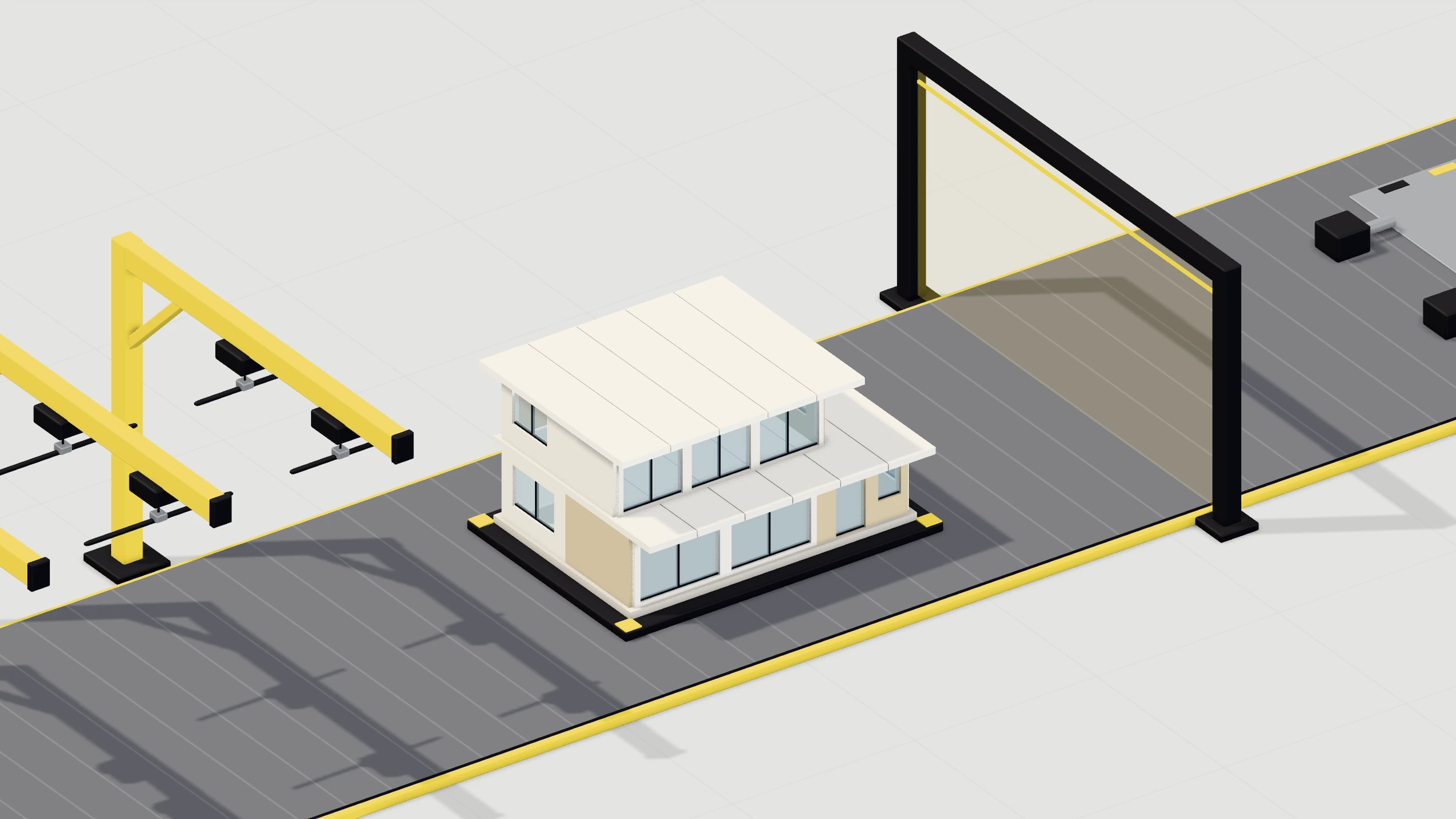
It’s Mat’s project. The argument goes that factories are cheap because every unit is the same, and buildings are expensive because every one is different: the site, the soil, the building code, the owner. ZURU says it can keep the moving line and still make every part different. It calls that a “lot size of one”.
It also says this isn’t 3D printing, which it reckons “will not be a meaningful way to mass produce buildings in the next 100 years”.
Dreamcatcherthe software
The design software is built on Unreal Engine, the games engine. It came with an Italian architecture start-up that ZURU bought, which Nick describes as two brothers whose parents were architects. The Herald puts the purchase at about 2019, but ZURU Tech was already based in Modena, with software called Dreamcatcher, in October 2018. Its chief technology officer and chief design officer today are Martin and Alessio Carianni.
As Nick describes it, you drop a pin on a map and it loads the local building code and the terrain. You draw the house and it works out the structure, including what an earthquake would do to it. Add a door or change a finish and the price changes. At checkout, the parts go to the factory.
There’s an AI model in it that turns a written brief into a floor plan. An AWS write-up says ZURU’s team compared prompting Claude 3.5 Sonnet with fine-tuning a Llama model on 200,000 examples. Both scored about twice as high as the GPT-2 model they started with on following the brief, and the fine-tuned one was better at making the measurements add up.
ZURU says it’s free to use. Nick says ZURU’s own projects come first, before it’s opened up to other people, and the website has no way in yet, only a waitlist for “early-access opportunities”.
Dreamcatcher was a good idea before AI. Now you could just get an AI to use software like it and do the whole thing for you.
Fable 5.2 designs a house
Anthropic released Claude Fable 5.2 on 9 November. On BenchCAD, a public test where models rebuild 3D parts, assemblies and circuit boards from engineering drawings, Anthropic says it scored 83.5%, against 44.4% for Fable 5.1. Anthropic also had it design three gadgets, circuit boards and 3D-printable cases included.
So we gave it a brief anyone could write. Alongside it, we only asked it to work as an architect would and told it which files to make.
“Design a three-bedroom family house for a plot 10 metres wide and 30 metres deep in England. Two storeys, about 110 square metres. Open-plan kitchen, dining and living room across the back, opening onto the garden. A downstairs toilet, a family bathroom, and an en suite off the main bedroom. Space to park one car at the front.”
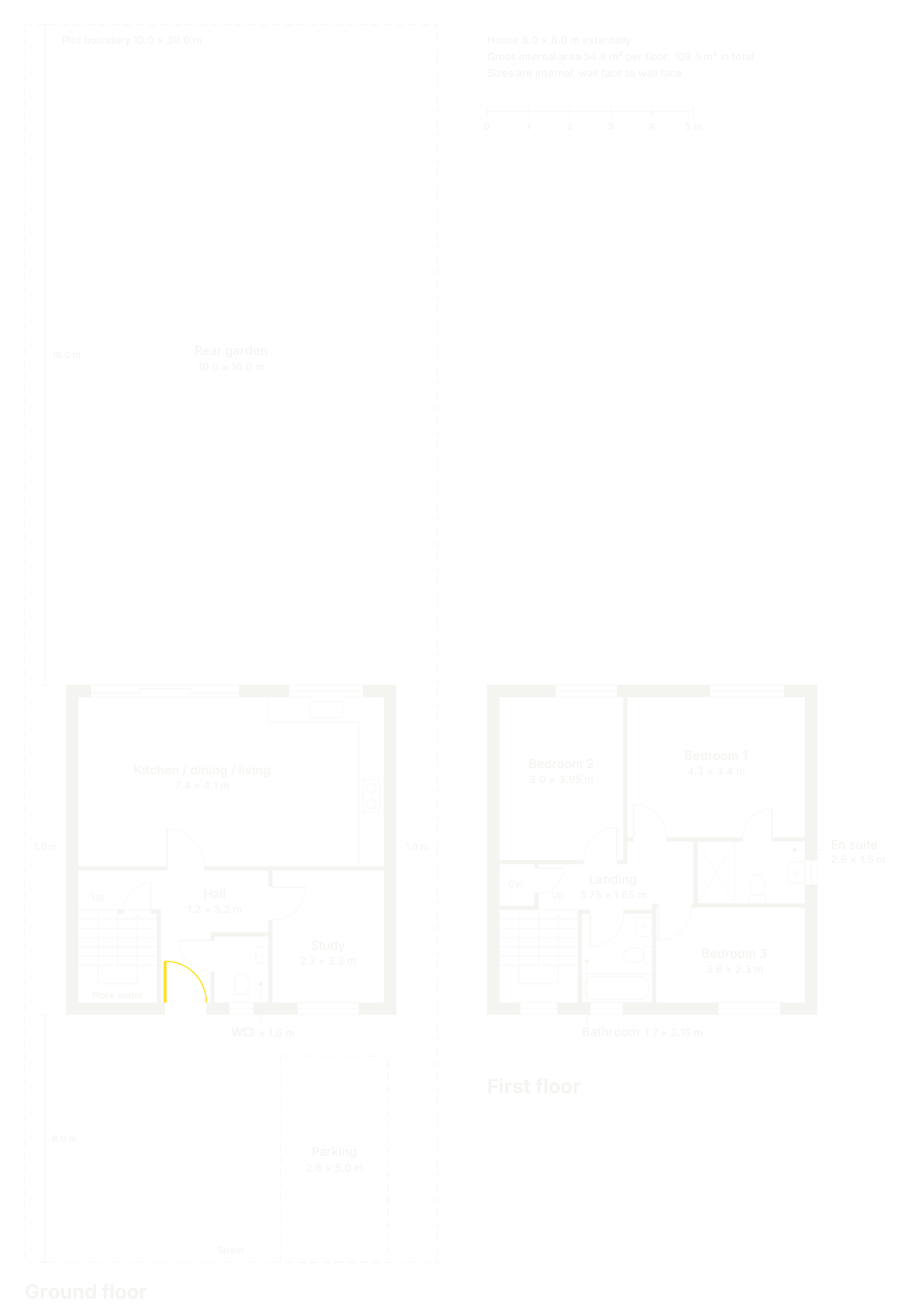
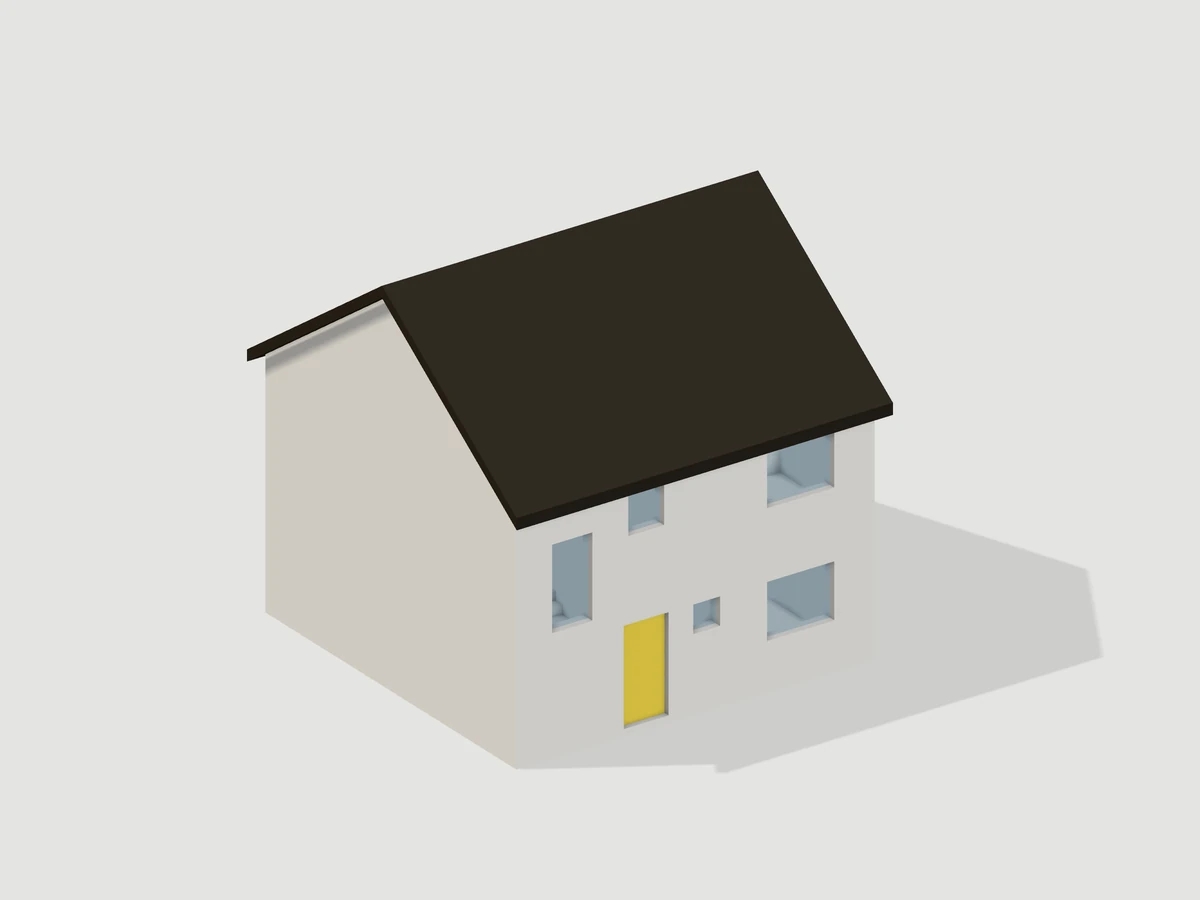
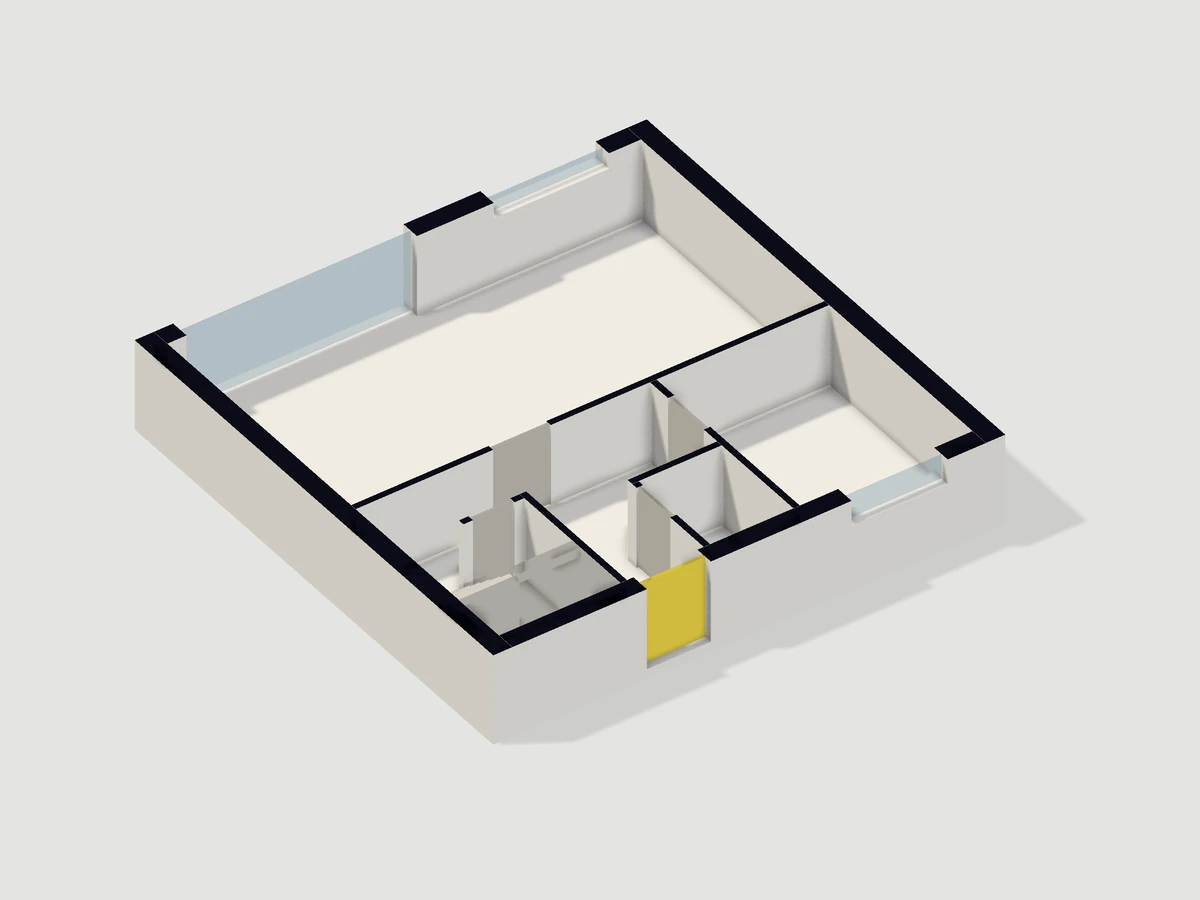
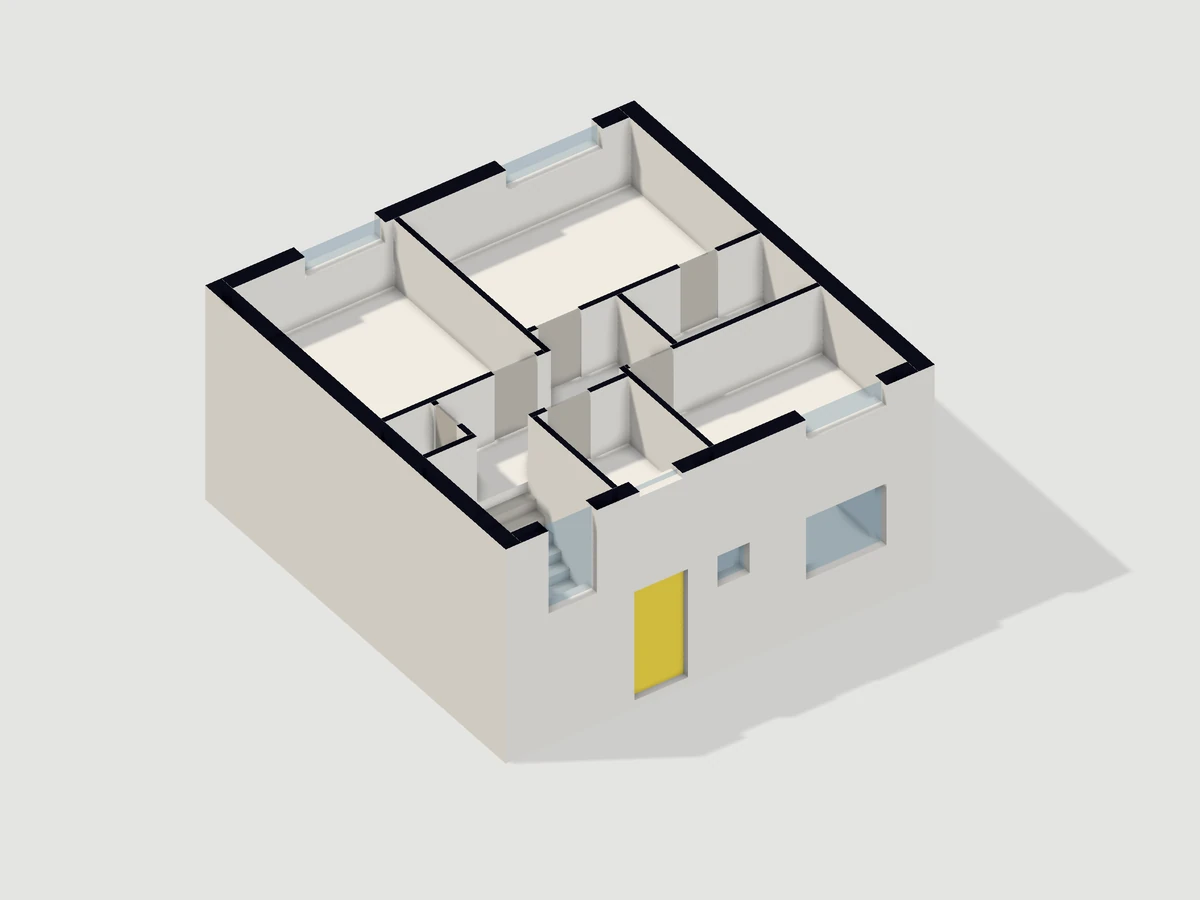
That’s all its own work. We rendered its 3D model and cut the top off to show each floor, but didn’t change anything. It took about 15 minutes.
What itcame back with
A detached house, 8 by 8 metres, with 109.5 square metres inside against the brief’s “about 110”. The kitchen, dining and living room runs the full width of the back, 7.4 by 4.1 metres, with 3.6 metre sliding doors onto the garden. The stair lines up on both floors.
It added a study nobody asked for, and said so. It also listed what it would ask the client: whether the study should be a utility room instead, that the third bedroom is a single, that the en suite window looks at the neighbour a metre away, and which way the house faces.
It couldn’t open its own 3D model to check it, but it loaded first time when we did. We’re not architects, so we can’t tell you whether it would get planning permission.
Sixteenmachines
Nick counts 16 modules on the line, each designed by ZURU, and has named wall, rebar, window, lattice and tile among them.
The walls are aerated concrete, which is light and insulates well. The cladding is ceramic tile, and the line can print a texture into it, such as a scanned wood grain.
The first line was a miniature. Nick has called it one-fifth scale in some interviews and one-quarter in others. A full-size test factory of about three hectares followed. Last year he said it was finishing a test building every one to two weeks, and this June he said it was one a week.
Checkingevery part
When every part is different there’s no checklist to hold one against. ZURU says the operators in its test factory “are not aware of what part or process is being produced at each station”, and that it aims to replace manual inspection with AI-powered vision systems.
By its own count ZURU Tech has more software engineers than all its other engineers combined. The team has grown from more than 100 people in 2018 to close to 800 engineers this June.
How big it’s meant to get
- The planned plant2km by 800m, or 160 hectares
- The first commercial factory10 hectares
- The test factoryAbout 3 hectares
- A football pitch105m by 68m
- A house12m wide
The factory sizes are ones Nick Mowbray has given. In 2022 he described a full plant 2km long by 800m across. In July 2025 he talked about a test factory of roughly 3 hectares and a 10 hectare building bought as the first commercial factory, and a plant that would turn out 10,000 square metres of building a day, which he called the second or third biggest factory in the world. He didn’t say whether the 10 hectare building is that plant. It’s a plan. The squares are drawn as squares because nobody has published the real shapes. Each square of the grid is 200 metres.
The shake tableJuly 2025
Nick told a business audience in Auckland that a three-storey test building had just been through recordings of about three of the world’s biggest earthquakes, Christchurch and Chile among them, and passed.
ZURU’s site promises a 100-year warranty. Asked about that this year, its US operations director said it was what ZURU was aiming for.
$500a square metre
That’s what Nick told the same Auckland audience a ZURU house would cost to build. A house of the same quality built today costs four or five thousand dollars a square metre, he said. He didn’t say which dollar.
Those are both his numbers. For an outside one, the Herald put New Zealand building costs at $2,500 to $6,000 a square metre in 2021.
In the UK, Build It magazine puts an average self build at £2,500 to £3,000 a square metre this year. Nick’s $500 is about £210 if he meant New Zealand dollars, or £370 if he meant American ones.
ZURU hasn’t published a price. Nick says it hasn’t settled how to set one, and that it’ll probably end up following supply and demand.
In 2022 he said costs would be “less than one tenth of what you can build for today”.
Flat-packedin assembly order
Once a house is ordered, the software works out the best shipping layout and the parts come off the line in the order they’ll be needed on site.
Anything going into an American house has to be certified by a US-based agency. ZURU says it uses Intertek, whose inspectors travel to China and check the parts before they leave.
On site, ZURU says the contractor will scan QR codes and follow the steps.
Made in Chinabuilt in America
The parts are made in China, with foundations, water treatment and sea walls built on site, and the first sites are in the US. In December 2024 Nick told Bloomberg that tariffs “don’t benefit us”, but that China’s supply chain was “still unbeatable, even with tariffs”.
The factory was originally going to be in Vietnam. In 2018 the Herald reported one being built there. By 2021 Nick was saying China would potentially make more sense, though BusinessDesk reports ZURU was still proposing a Vietnam factory in December 2023.
In October ZURU announced a new headquarters in Shenzhen, eight floors with room for about 3,000 staff. The house, toy and supermarket teams start moving in early in 2027.
MalibuJanuary 2025
The Palisades Fire destroyed more than 700 buildings in Malibu, most of them homes. About 300 were on the beach along the Pacific Coast Highway.
Over the following months a ZURU company registered at its El Segundo office, near Los Angeles, bought burned beachfront lots. ZURU now has 16. The first nine cost a reported US$65m, and Dwell put all 16 at nearly US$100m.
Weston Littlefield, the agent who bought most of the lots for them, told Realtor.com his client only wanted lots with at least 40 feet of beach frontage. Each new house can only be as big as the one that burned, plus 10%, and he said the width “makes a huge difference” if you want to sell a $25 million house.
Sixteen housesby 2029
Marcel Fontijn, who runs ZURU Tech’s US operations, gave ABC7 the plan in January: 16 houses made at the factory in China and shipped over, with aerated concrete walls and concrete roofs. The first two finished by the end of 2027 and all of them by 2029.
They won’t be the cheap ones. Fontijn told Realtor.com these aren’t the cut-price houses ZURU talks about elsewhere. He told BusinessDesk that foundations and septic systems that close to the ocean are “incredibly expensive”, and the houses will sell at the going market rate.
In August Fontijn told BusinessDesk the first lot had passed planning verification, Malibu’s sign-off for a like-for-like fire rebuild, and the rest were still going through it. That’s the planning stage, not a building permit, and I haven’t found a report of building work starting since.
What Malibumakes of it
Councilman Steve Uhring told ABC7: “everybody’s gonna realize the boys from New Zealand are billionaires, they’re in it to make money.” Marianne Riggins, mayor until February, told Dwell the plan was “intriguing”.
Dwell went looking in February for a house the brothers had built before, in California or anywhere else, and said it was hard to find evidence one exists.
Fontijn’s answer is that ZURU is rebuilding what was there.
When the houses were due
- When ZURU said it
- The date it gave, now passed
- The date it gave, still ahead
Each row is a date ZURU or Nick Mowbray gave, or was reported as giving, for when the houses would arrive. Scale-model houses were coming off a miniature line by 2021, and full-size test buildings came later. None of the five dates that have passed was met, as far as I can find. I can’t find a finished ZURU house outside China, or one for sale. The last two dates haven’t come round yet.
Who tried before
Set out to make large buildings cheaper and simpler with factory-made parts. It had about 8,000 staff when it filed for bankruptcy in June 2021.
Built more than 170 homes in the Bay Area and was valued at US$1bn in 2022. It told staff it was closing in November 2023, after a funding round was called off at the last minute.
Katerra and Veev were American start-ups building with factory-made parts, and both were paid for by investors. ZURU’s figure is Nick’s, from a talk at the Sydney Opera House last November. BusinessDesk, which reported it, didn’t say which dollar.
What hasn’thappened yet
- Nobody outside ZURU has bought one. In July 2025 Nick said he hoped ZURU could start working with customers in two or three years.
- ZURU’s own site says the first house will be in Hawaii in 2027 and doesn’t mention Malibu. In June, Nick said Hawaii, then Malibu.
- ZURU hasn’t listed. Bloomberg reported in 2024 that an IPO was being discussed, because Nick said scaling up would need outside capital.
- There’s no price.
The toy company, meanwhile, carries on. Lego’s trade mark case against it is listed for New Zealand’s Supreme Court on 17 and 18 November. In October the Herald passed on a rumour from The Australian’s DataRoom column that ZURU had asked investment banks for proposals on a possible bid for Mattel. Nick’s answer to BusinessDesk was no comment.
The first two Malibu houses are due by the end of 2027.