Zipline and the future of dinner
Zipline’s drones lower food onto your patio a few minutes after it’s cooked. Its chief executive says a dinner party’s food shouldn’t all arrive at once, and Travis Kalanick wants robot-made meals to cost about the same as a supermarket shop.

Since Tuesday, Uber Eats customers in Spring, just north of Houston, can choose “by drone”. The food comes down out of the sky in a small white pod on a cord and lands on the patio table. The aircraft carrying it stays 330 feet up, a little higher than the top of Big Ben.
That’s Zipline. Two weeks ago it raised $1.5 billion at a $21.5 billion valuation, nearly three times what it was worth in January, and Walmart signed up for 300 more stores. Uber wants a million Zipline deliveries a day by 2029.
I think this is the future of delivery, and maybe of cooking too. If restaurant food can land on your table a few minutes after it’s cooked, it’s fair to ask how long homes will keep full kitchens.
How a delivery works
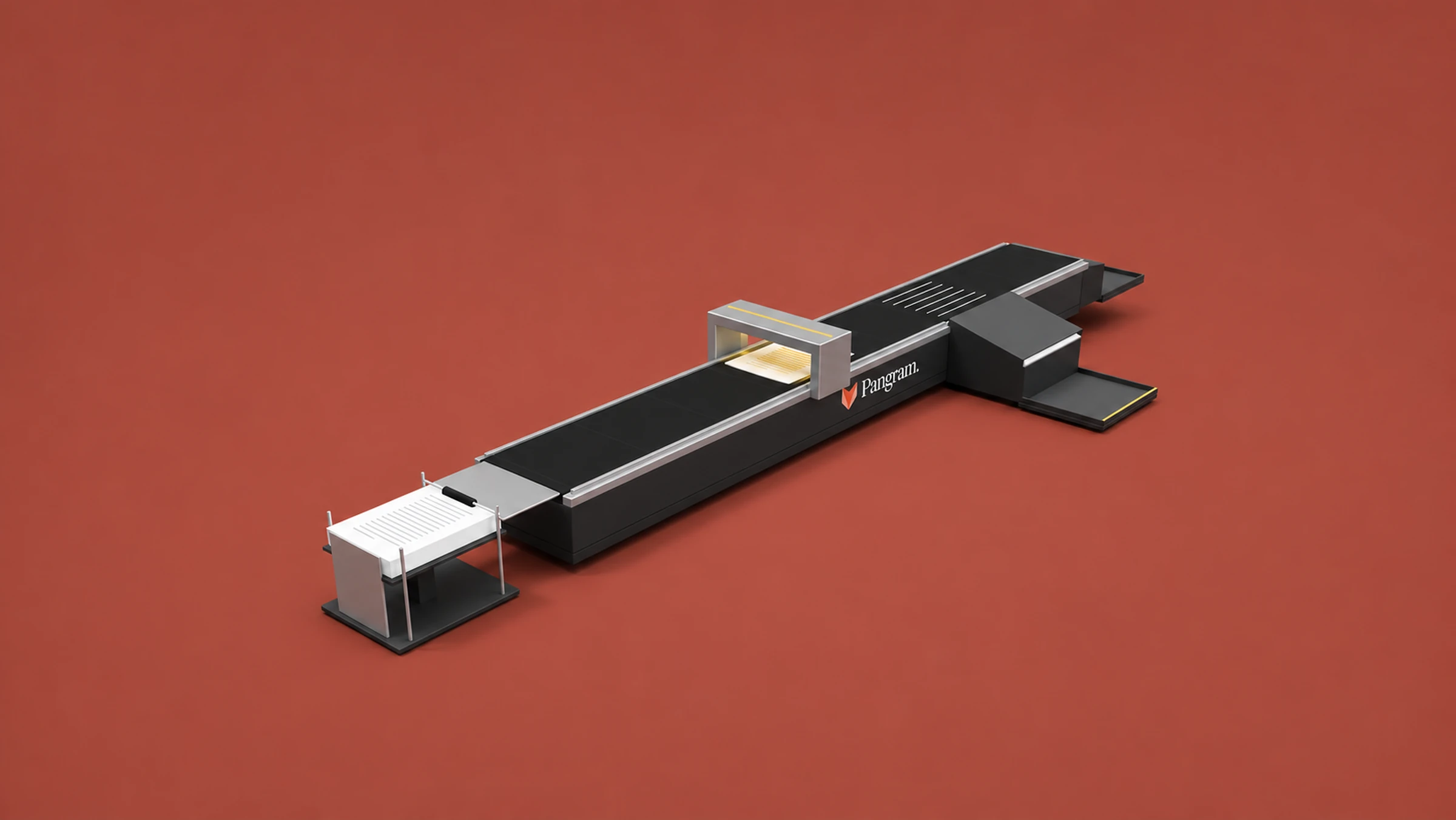
Restaurants don’t need a landing pad. A contractor turns up for a couple of hours, cuts a hole in an outside wall and fits what Keller Rinaudo Cliffton, Zipline’s chief executive, says “looks like a vending machine”. Staff put the order in and press a button. A Zip lowers its pod into the box, picks the order up and flies off at up to 70 mph.
At your house it stops 330 feet up and lowers the pod on a tether. The pod is about the size of a gym bag, with its own cameras and three small fans, and it steers itself down to a clear spot, in wind too. It drops the order out of its bottom doors and gets reeled back in. Keller says it was inspired by Eve from WALL-E.
Staying that high is about noise and safety. Zipline says the average drone delivery happens 32 feet off the ground, and that other companies’ drones are often seen hovering outside people’s windows. With a Zip, only the pod comes near the house.
Each Zip carries up to 8 lb, which Keller reckons is dinner for four to eight people, to homes up to 10 miles away. In January the median flight took three minutes. Nobody flies them. Every flight is autonomous, and Zipline says its aircraft have flown 150 million miles without a safety incident.
Not a camera drone
Say “drone” and most people picture something small with a camera on it. Keller made the point on TBPN on Tuesday:
“China makes more drones in a day than the United States makes in a year. And that’s a true statistic. But it’s true for a very specific kind of vehicle. It’s like a five pound or even two pound quadcopter.”
Keller Rinaudo Cliffton on TBPN, 17 November
A Zip is a different kind of machine. He says it weighs 50 or 60 pounds, has 700 unique components and 43 major subassemblies, has to fly in all weather and has to be certified by the FAA.
Drawn to the same scaleA DJI camera drone next to a Zipline P2 aircraft, seen from above
 Mini 4 Pro camera drone
Under 249 g, 37 cm across
 P2 delivery aircraft
About 25 kg empty, 2.4 m wingspan
Zipline designs and builds them in South San Francisco. On a tour of the factory on 6 November, Keller said it had just quadrupled in size and needs to make 50,000 aircraft a year.
China’s nearest equivalent is Meituan’s Keeta Drone, which had made about 780,000 deliveries by the end of 2025, mostly flying fixed routes to pickup lockers. Zipline had passed 3 million by October.
Ten years, then very fast
Zipline started in 2016 flying blood to hospitals in Rwanda. A peer-reviewed study found big falls in hospital deaths from bleeding after childbirth at the hospitals nearest its bases. It took two years to make its first 5,000 deliveries.
How long each million deliveries tookZipline’s first delivery was a blood drop in Rwanda in October 2016
One of the TBPN hosts called it “a ten year overnight success”. Zipline has made more than a million deliveries around Dallas this year, and in January Keller said there were towns in the Dallas area where more than half of homes order from it.
Walmart has Zipline at 21 stores and is adding 300, and Keller says it can deliver 90,000 of the 100,000 products in a supercenter. Uber invested in August. A million deliveries a day would be, by Keller’s count, a quarter of all Uber Eats deliveries in the US.
Restaurant food at home
Keller says one of Zipline’s first food customers burned their tongue. People are used to fries that are 45 minutes old. With a Zip it can be two or three minutes from the oven to the doorstep.
“It’s almost like you’re having an in restaurant experience at home.”
Keller Rinaudo Cliffton on TBPN, 25 November 2025
Range matters as much as speed. Keller says a car delivery doesn’t pay beyond three or four miles, so a Zip’s 10 miles lets a restaurant reach about ten times as many people. Zipline says its longest-standing restaurant partners grew their delivery sales by 26% between March and October, and that the drone orders came on top of what other apps were already bringing in.
The idea I like most came up on the factory tour, when the talk turned to a multi-course meal sent one course at a time.
“If you’re having like a big dinner party for 10 people, you know, the idea that you have all the food delivered and it just sits there and gets gross and cold over the course of an hour is not how the future’s gonna work.”
Keller Rinaudo Cliffton on TBPN, 6 November
Each course is cooked and flown as you finish the last one, and lands a few minutes later. That isn’t much different from being in the restaurant, except you’re at home and nobody has to drive.
Dinner for eight, one course at a timeEach course is cooked to land as the last one is cleared
Do homes still need kitchens?
Zipline says some customers have deleted their grocery lists. If restaurant food can turn up within minutes whenever you want it, maybe in future some homes won’t have kitchens at all. It comes down to price.
Restaurants are expensive because of everything around the food. In a typical US sit-down restaurant, food and drink cost about a third of what you pay. Staff cost more than that, and the owner keeps under 3%.
Where a US sit-down restaurant’s money goesMedian share of sales in 2024, National Restaurant Association
Travis Kalanick, who co-founded Uber, has been working on this since 2018. His kitchen business is now part of Atoms, a robotics company he launched in March, and he told TBPN this week that the factory making its food robots is going up in Pittsburgh early next year.
“The whole idea was can you get a meal that’s prepared and delivered to you so efficiently that it starts to approach the cost of going to the grocery store. Because if you do, you do to the kitchen what Uber did to the car.”
Travis Kalanick on TBPN, 13 March
His Lab37 robot builds up to 200 bowls an hour and weighs every portion. In July he told TBPN that once robots cook the food and robots deliver it, “the price of food goes down”.
Marc Lore’s Wonder cooks for 25 restaurant brands in one kitchen and bought Sweetgreen’s robot kitchen business last year. One of those machines can make up to 500 bowls an hour, against 30 to 45 for a person. Lore says two of Wonder’s new concepts are about 30% cheaper than the competition: “We just took the labor savings and put it back in a price.” He also says half of Wonder’s Texas deliveries will go by drone next year.
Machines that weigh every portion could also cook to your own settings, with your salt level and allergies saved once and used for every order. Lore is going further. Wonder plans to take a blood test, set your health goals and budget, then let AI choose all 21 of your meals each week if you want it to. He says he’s eaten that way for the past year.
Zipline describes itself as one of the fastest-growing AI and robotics companies in the world. Keller says it flies from 6am to 11pm for now and will soon run around the clock, because “robots don’t need to sleep”.