Where do you stand on AI?
Ten things people argue about with AI, from how much water data centres use to whether it’ll take your job. Pick a side on each and we’ll show you what the evidence says.

We use AI all day at Vu, so we’re not neutral, and I think the case for it gets heard a lot less than the case against. Most arguments I see make only one side’s case, so for ten of the big ones we’ve written the best case for each, as fairly as we could.
Pick where you stand under each pair to open the evidence, with a link to every source. Each answer moves the yellow line at the top, and the end shows where you land and how you compare with our reading of the evidence.
Nothing you pick leaves your browser.
Do AI data centres use too much water?
It’s taking water from places that are already short
of new US data centres since 2022 are in areas already short of water, by Bloomberg’s estimate.
a year: what Microsoft got permission to take from under the ground for one site in Querétaro, Mexico. In Chile a court partly reversed Google’s permit over water.
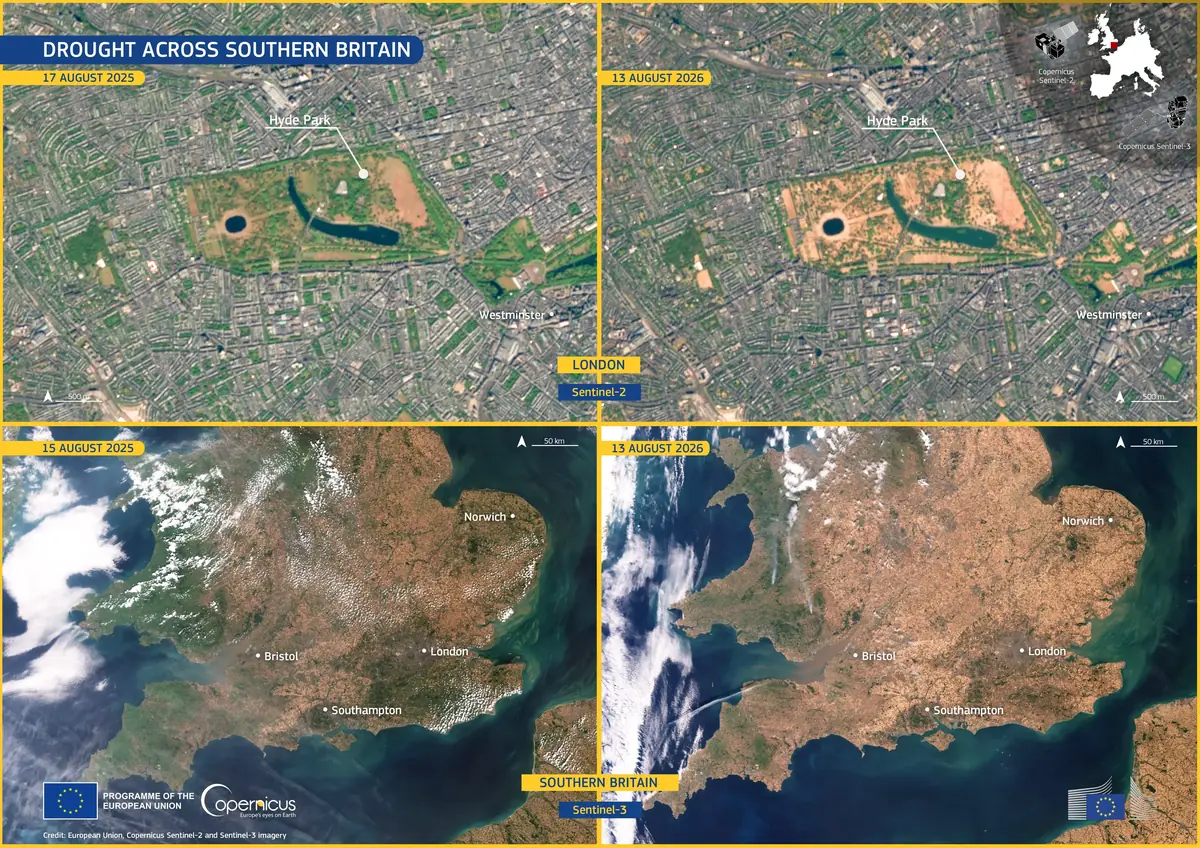
of England was in drought this August. Global Action Plan says 84% of proposed sites that need a lot of water are in areas short of it now or expected to be by 2040.
Most of AI’s water is hidden in power stations: Berkeley Lab puts US data centres’ indirect water use at about 12 times what they use on site.
It’s a tiny amount, and golf courses use far more
as much goes on golf. US golf courses put about 531 billion gallons on their grass, against about 17 billion used on site by every US data centre in 2023.
for a typical Gemini text prompt, Google says. About five drops.
of the data centres surveyed in England already use waterless cooling. Newer sites send the same water round closed loops instead of evaporating it, and Microsoft says its new designs use no water for cooling.
The evidence leans towards ‘Barely any’
Nationally the numbers don’t back that up. Even counting power stations, US data centres use less than half the water golf courses do, and newer sites recycle water in closed loops. You’re right that a big site in a dry place can matter to the people around it.
Nationally it’s small: even counting power stations, US data centres use less than half the water golf courses do. The real issue is big sites in dry places.
The numbers back you: even counting power stations, US data centres use less than half the water golf courses do, and newer sites recycle water in closed loops. The fair worry is local, where a big site goes somewhere already short of water.
What the evidence says
- The viral bottle of water is badly out. The claim that ChatGPT drinks one every 10 to 50 answers comes from a 2023 paper that assumed 4 watt-hours an answer, about 17 times what Google has since measured for Gemini, and counted mostly power-station water. Even Karen Hao, author of Empire of AI and one of the best-known critics, has corrected a water figure in her book that was out by a factor of 1,000.
- Counting power stations is fair. It makes both numbers several times bigger, and data centres still use under half the water golf courses do.
- England’s figures are small too. Data centres use about 0.2% of the water businesses buy, and one day of leaking pipes wastes more than they use in a year. Some campaign numbers are shaky: Sam Dumitriu of Britain Remade, who campaigns for more building, found a Global Action Plan figure for one site’s share of the East of England’s shortfall out by a factor of almost 100.
- The case against is right about location. A big site in a dry area matters to the people around it, however small the national total. A study for England’s business water market recommended a reporting framework this year so water companies can see what each site uses.
Water for one typical Gemini text prompt
Who’s arguing each side on X
Arguing ‘Too much’

Govt sacrifice the creative industries at the high altar of AI without checking if there’s even enough water to run the damn processing centres.
- 13 replies
- 256 reposts
- 728 likes
Arguing ‘Barely any’

I was really surprised when I first saw this chart on water use by data centers. Given how much it gets discussed as a supposed problem I would have expected it to be more than this.
- 57 replies
- 202 reposts
- 1.2K likes
Is AI using too much electricity?
It’s pushing up bills and emissions
in data centres’ electricity use last year, and it’s set to double by 2030. On the biggest US grid, almost all the forecast growth in peak demand comes from data centres.
a month more on Virginia household bills by 2040, the state’s own auditors expect.
in Microsoft’s emissions in a year. The IEA says up to 27 GW of gas generators could be powering data centres on site by 2030.
It’s a small share of the world’s power, and it can cut more emissions than it adds
of the world’s electricity goes to data centres of every kind.
for a typical Gemini prompt, less than nine seconds of TV. An hour of Netflix uses about as much as 300 prompts.
The IEA says using the AI we already have to run grids, factories and buildings better could cut emissions by far more than data centres produce.
The evidence leans towards ‘It’s worth it’
Partly. Data centres use about 1.5% of the world’s electricity, and a prompt uses less than nine seconds of TV. You’re right about some places: in parts of the US data centre demand has pushed up prices, and tech companies’ emissions are rising.
It’s a small share of the world’s power and a prompt uses very little, but demand is growing fast and has pushed up prices in some places.
Mostly. It’s about 1.5% of the world’s electricity, and a prompt uses less than nine seconds of TV. But demand is growing fast, prices have gone up near some US hubs, and the IEA’s emissions cuts still have to happen.
What the evidence says
- Bills are the strongest point, and it’s mostly local. Data centres have pushed up wholesale prices, most of all in northern Virginia, but contracts and regulation mean only part of that reaches household bills, and slowly. Berkeley Lab found the states where demand grew fastest mostly saw prices fall in real terms from 2019 to 2025, though it warns that may not last.
- “Up to 267%” isn’t a bill. It’s from Bloomberg’s analysis of wholesale prices at single points on the grid near data centres, and PolitiFact rated its use for bills “Mostly False”.
- In Britain it’s concentrated in one town. In Slough, data centres use about two-thirds of all the electricity the town takes from the grid.
- Emissions are a fair worry. Google’s supply chain emissions rose 25% last year from building all this, and in October a Wyoming utility agreed to build 564 MW of new gas generation for a planned Google data centre. Carbon Brief found British data centres’ CO2 could be hundreds of times higher than government estimates, depending on how much of their power comes from gas. The cuts the IEA describes only happen if AI gets used that way.
Great Britain’s electricity used by data centres
Where it went in 2024

Who’s arguing each side on X
Arguing ‘Too much’

Global electricity consumption from data centres surged in 2025, driven by AI … electricity demand from data centres is set to almost double by 2030 – and to triple from data centres focused on AI
- 2 replies
- 40 reposts
- 80 likes
Arguing ‘It’s worth it’

This is a misreading of a Bloomberg article that found that wholesale nodal power prices very close to data centers rose as much as 267%. This is NOT a rate that residents pay … It has some effect on residential bills, but the effects haven’t been large enough to be noticeable as a general pattern.
- 18 replies
- 85 reposts
- 781 likes
Should councils block new data centres?
Locals get the building work and the generators, and hardly any jobs
people build a big data centre, then about 50 run each building, half of them contractors, say Virginia’s auditors.
permanent jobs are promised by the campus approved in Hertsmere, Hertfordshire.
Several have gone on green belt after ministers overruled councils, and the government has admitted a “serious logical error” in approving one in Buckinghamshire. Sites usually have rows of diesel backup generators, and one in Hayes has a permit for twelve.
They pay for local services and hardly use any
in property tax from data centres in Loudoun County, Virginia, in the year to June 2026, 39% of the county’s budget. The county has cut its property tax rate from $1.145 to $0.805 per $100.
a year for each finished AI Growth Zone site, the government says, and English councils keep all the extra business rates for 25 years.
Data centres don’t need school places or bin collections. If one council says no, the data centre and its tax go somewhere else.
The evidence leans towards ‘Build them’
The jobs point is fair: a big building needs about 50 people to run it. But the tax is large and the services it uses are small, and Loudoun County has cut its property tax rate on the back of it.
A data centre pays a lot of tax and uses few local services. The permanent jobs are few, though building a big one takes about 1,500 people.
The tax side backs you: Loudoun got $1.2bn from data centres last year and has cut its property tax rate. Permanent jobs are few, though building a big one takes about 1,500 people.
What the evidence says
- Jobs are the weak spot in the case for. A Brookings study this year found each data centre adds roughly 100 to 200 jobs to its area, depending on the type, and nearby house prices rose 2% to 5%.
“It’s only temporary” doesn’t always land with the people doing the building, though. In October a CBS 21 reporter put it to a tradesman working on a new data centre at Homer City, Pennsylvania:
Reporter“People say it’s only temporary. It’s only when they’re building it out. Then what happens?”
Tradesman“Hey, every job in my field is temporary.”
CBS 21, Face the State, October 2026
- Loudoun is an extreme case. Most places will get far less.
- Councils don’t always get the final say. Ministers have approved sites councils refused, including one at Abbots Langley in Hertfordshire, and the new data centre covenant lets ministers reserve grid connections for the most strategic sites and let them run their own generators until they’re connected.
- The infrastructure label is about cyber attacks. Data centres became critical national infrastructure in 2024 to protect them from cyber attacks and IT blackouts. It doesn’t put them ahead of households for power or water, as some campaigners have said.
Loudoun County, Virginia: property tax rate per $100
Where the county’s budget came from, year to June 2026

Who’s arguing each side on X
Arguing ‘Block them’

Now local residents aren’t just objecting to a data centre, they’re objecting to a fossil-fuel power plant as well
- 6 replies
- 3 reposts
- 21 likes
Arguing ‘Build them’

They must pay £20m+ to the local council every year, which will go towards council tax cuts. They must pay for their own electricity grid connections and have their own queue rather than delaying connections for anyone else.
- 31 replies
- 9 reposts
- 166 likes
Will AI help poorer countries catch up?
It’ll make the gap between rich and poor countries wider
countries have none of the big data centres AI runs on. Only 32 have them.
of working-age people in the global North use AI, against 16.2% in the South, and Microsoft’s figures show use growing faster in rich countries.
an hour was paid to people in Kenya for some of the work that made chatbots safe to use.
It gives a child anywhere a tutor
children are out of school.
of normal learning in six weeks, by the World Bank’s estimate, for Nigerian pupils in teacher-led after-school sessions with an AI tutor.
ChatGPT is growing fastest in the countries that score lowest on the UN’s human development index.
The evidence leans towards ‘Helps them catch up’
The gap in computing power is real. But trials in Nigeria and Sierra Leone found a year or more of extra learning in a few weeks, and the free versions work on a cheap phone anywhere.
The learning results are some of the strongest in the whole debate. The gap in computing power is real, but the free versions reach phones anywhere.
The trials back you: a year or more of extra learning in six to eight weeks, in Nigeria and Sierra Leone. Use is still growing faster in rich countries, so the gap hasn’t closed yet.
What the evidence says
- Nigeria wasn’t a one-off. In June Google DeepMind reported a similar result from 1,763 students in Sierra Leone using Gemini. It’s a company testing its own product and it hasn’t been peer reviewed, but it lines up with what the World Bank found.
- Nigeria’s pupils had teachers. The sessions ran in school computer labs with teachers guiding pupils, so they don’t show what a child can manage alone with a phone.
- The gap is real too. Use is growing everywhere but faster in rich countries, and most of the AI computing power added since 2022 has gone to the US.
- The free versions travel. I don’t think it matters much to a child with a cheap phone where the data centre is. Gemini and ChatGPT both have free versions, and OpenAI made its cheaper paid plan free for a year in India.
Where the AI computing power added since 2022 has gone
Who’s arguing each side on X
Arguing ‘Widens the gap’

Since 2022, 72% of the world’s AI compute has ended up in the US and about 10% in China. And the US share keeps growing.
- 23 replies
- 118 reposts
- 611 likes
Arguing ‘Helps them catch up’

No surprise: giving Nigerian high school students access to GPT4 (ha, via Copilot!) let them learn a LOT more English (0.3 SDs). AI will be so insanely good for developing countries.
- 8 replies
- 23 reposts
- 135 likes
Can we trust AI with our health?
It sounds confident and gets things wrong
Chatbots pass medical exams, but that doesn’t mean they help patients.
of the time the AI on its own named a relevant condition, in an Oxford-led trial with 1,298 people. People using it managed that in fewer than 35% of cases, no better than people without it.
more often than needed, chatbots recommended mental health checks for LGBTQIA+ patients. Their advice changed with who the patient was.
It’s already finding cancers that doctors miss
cancers found by AI-supported breast screening in Sweden’s MASAI trial of over 100,000 women, with 44% less reading for radiologists and no more false alarms. The NHS is testing it on nearly 700,000 women.
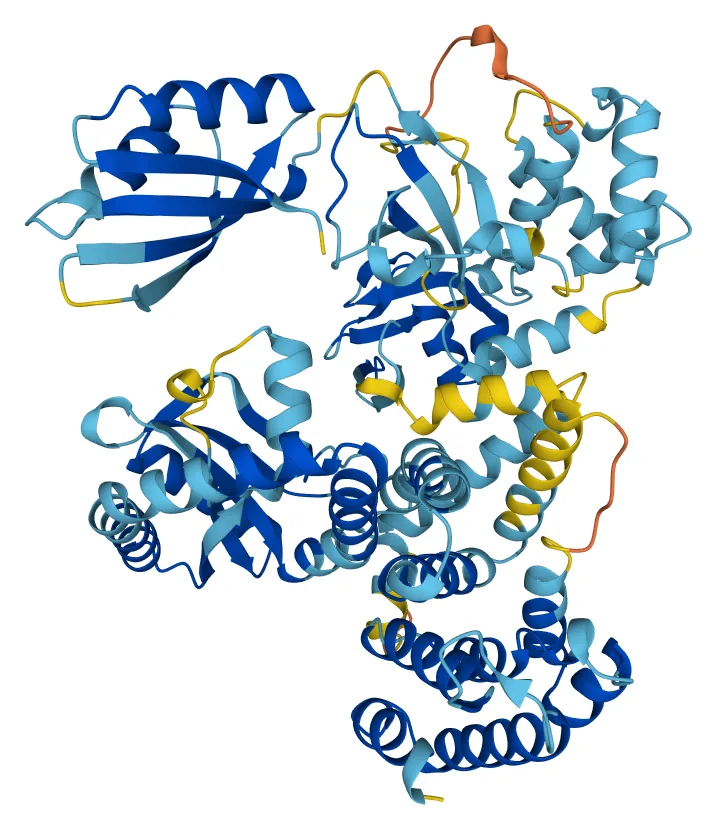
protein shapes predicted by AlphaFold, which won its makers the 2024 Nobel Prize in Chemistry and is used by over 3 million researchers.
The evidence leans towards ‘It’s already helping’
That’s true of general chatbots: in a trial, people using them did no better than people without. But specialist tools used by doctors are already finding more cancers in big trials.
Specialist tools tested in big trials are already beating standard care, but few places use them yet. General chatbots, which far more people use, haven’t helped people work out what’s wrong with them.
The big trials back you: AI-supported screening found 29% more cancers, with less work for radiologists. But few places use it yet, and the chatbots people actually use haven’t helped them work out what’s wrong with them.
What the evidence says
- The two sides mostly mean different AI. The worrying results come from general chatbots used by members of the public, the good ones from specialist tools tested in big trials and used by doctors.
- In practice it’s the wrong way round. As the cardiologist Eric Topol points out, the imaging tools proven in randomised trials are mostly not in use yet, while chatbots with little proof from real medicine are used widely.
- AI screening didn’t miss more cancers. MASAI’s final results, in The Lancet in January, counted the cancers that turned up between screenings. That shows AI was no worse, though not that it was better.
- Drug discovery is earlier on. A drug for lung scarring, whose target and molecule were both found with generative AI, did well in a small phase 2a trial last year. Lung function improved on the highest dose and fell on placebo.
Oxford-led trial: who named a relevant condition
AlphaFold’s predicted shape for SpoT, a bacterial enzyme
How sure AlphaFold is of each part
- Very high
- Confident
- Low
- Very low
Who’s arguing each side on X
Arguing ‘Not yet’

The study found that LLMs present risks to people seeking medical advice due to their tendency to provide inaccurate and inconsistent information.
- 18 replies
- 50 reposts
- 98 likes
Arguing ‘It’s already helping’

Superhuman interpretation AI for medical images, such as mammography and endoscopy, has been proven to improve diagnostic accuracy in multiple randomized trials but mostly not implemented.
- 22 replies
- 82 reposts
- 356 likes
Is AI making people worse at thinking?
People are handing their thinking over to it
in the exam for Turkish students who’d practised with GPT-4, once it was taken away. In practice they’d done 48% better. The trial had about 1,000 students.
of UK students say they use AI for assessed work, and proven cases of AI cheating at UK universities more than tripled in a year.
Used properly, it’s the best tutor most people will ever get
as much learned by students with an AI tutor in a Harvard physics course as in a well-run active learning class, and in less time.
In the same Turkish trial, a tutor version that gave hints instead of answers did no harm.
The evidence is mixed
Half right. Students who got answers from GPT-4 did 17% worse in the exam. But students with a tutor that gave hints did fine, and at Harvard an AI tutor more than doubled what students learned.
It depends how it’s used. Students who get answers learn less. Students with a tutor that makes them think learn as much or more.
Half right. At Harvard an AI tutor more than doubled what students learned. But students who got answers from GPT-4 did 17% worse in the exam, so it depends how it’s set up.
What the evidence says
- Both Turkish results come from one trial. Students who got answers from GPT-4 learned less. Students who got hints from a tutor version did as well as students with no AI at all.
- Lecturer-built AI worked across 19 universities. In a trial this month, AI tools designed by each course’s own lecturers, from tutors and coaching bots to role-play simulations, improved results in supervised, in-person exams. It hasn’t been peer reviewed yet, and the Harvard result was one course over two lessons, so there’s more to find out.
- The viral brain-scan study is thin. The MIT study that said ChatGPT users showed the weakest brain connectivity was small, and it still hasn’t been published in a journal.
- The Turkish trial’s lead has a positive result too. Hamsa Bastani has since run a five-month trial in Taipei high schools, where students whose AI tutor chose what they practised next did better in an exam without AI than students with the same tutor and a fixed set of problems.
Turkish students who practised with GPT-4 giving answers, against no AI
Who’s arguing each side on X
Arguing ‘Worse’

AI causes cognitive offloading, encourages cheating on homework, and enables the possibility of forming human-like relationships with a chatbot.
- 133 replies
- 329 reposts
- 1.4K likes
Arguing ‘Better’

Excited to share our first positive results on AI in education! … across 770 students, adaptive sequencing improved performance on an in-person final exam taken without AI assistance by 0.15 SD, with larger effects for beginners.
- 13 replies
- 55 reposts
- 312 likes
Will AI take more jobs than it creates?
It’s already shutting young people out
lower employment for 22 to 25-year-olds in the most AI-exposed US jobs than if they’d kept pace with less exposed peers, up from 15% a year earlier, Stanford researchers found. Experienced workers show no gap.
It shows up as people not getting hired rather than people being laid off, so it’s easy to miss.
in UK graduate vacancies on Adzuna in the year to September.
New technology has always created more work than it destroyed
of the jobs Americans did in 2018 had titles that didn’t exist in 1940.
productivity for 5,172 customer support agents given AI, and most for new staff. Where AI is used, it helps the least experienced most.
Nearly four years after ChatGPT came out, Yale’s Budget Lab still finds no link between AI use and changes in employment.
The evidence leans towards ‘Creates more’
There’s an early warning for young people in the most exposed jobs. But across the whole economy, studies still find no link between AI and job losses, and in the UK the drop hits non-graduates as hard as graduates.
So far there’s no sign of AI cutting jobs across the economy, but in the US young people in the most exposed jobs are being hired less.
Across the economy, studies still find no link between AI and job losses. But in the US young people in the most exposed jobs are being hired less, so it’s worth watching.
What the evidence says
- Stanford doesn’t see widespread losses. Its own paper finds no evidence of widespread job losses across the economy, even as young people in the most exposed jobs fall behind.
- In the UK it’s harder to pin on AI. The Institute for Fiscal Studies found the rise in young people out of work and education has been about the same for graduates and non-graduates, which cuts against the idea that AI is hitting graduate jobs hardest. Adzuna counts adverts rather than jobs, and the Institute of Student Employers found graduate hiring grew.
- The US looks similar. Ernie Tedeschi found that young non-graduates’ employment has fallen slightly more than young graduates’ since 2019, and that the rise of working from home explains the drop better than AI does.
Who’s arguing each side on X
Arguing ‘Takes more’

AI is currently being developed as an automation technology … new technologies have always created lots of jobs. True, but that does not guarantee that this time will be the same.
- 31 replies
- 164 reposts
- 600 likes
Arguing ‘Creates more’

The very recent study by Kharazian et al. … finds that companies that adopt AI more end up hiring MORE entry-level workers.
- 26 replies
- 62 reposts
- 397 likes
Is training AI on people’s work theft?
It was built on work nobody paid for
AI companies trained on millions of books, songs and pictures without asking.
is what Anthropic agreed to pay to settle with authors over pirated books, about $3,000 a book.
in freelance job posts for writing and coding within eight months of ChatGPT, and 17% fewer for image work.
of 11,520 responses to the UK government said AI companies should need a licence.
Learning from someone’s work isn’t copying it
People learn by reading and looking at other people’s work. A US judge ruled that training on books Anthropic had bought was “exceedingly transformative” and fair use. It was the pirated copies that cost it.
In the UK, the High Court found that Stable Diffusion doesn’t store or reproduce Getty’s images, so the model itself isn’t a copy of them. Getty has appealed.
The evidence leans towards ‘It’s learning’
The piracy part is right: Anthropic agreed to pay $1.5bn over pirated books, and a German court ruled against OpenAI over song lyrics. But US judges have ruled that training on books bought legally is fair use, and a UK court found that Stable Diffusion doesn’t store copies of Getty’s images.
US judges have said training on books bought legally is fair use, but pirated copies aren’t, and most UK responses want licensing.
The courts mostly back you so far: US judges ruled training on books bought legally was fair use, and a UK court found Stable Diffusion doesn’t store Getty’s images. But Anthropic agreed to pay $1.5bn over pirated copies, and a German court ruled against OpenAI over song lyrics.
What the evidence says
- US judges mostly say the training is allowed and the piracy isn’t. Even the judge who ruled for Meta warned that “in many circumstances it will be illegal to copy copyright-protected works to train generative AI models without permission.”
- Britain’s main case didn’t decide it. Getty dropped its training claim because the training happened outside the UK.
- It’s far from settled. Bigger cases, like the New York Times’ against OpenAI, are still going. Anthropic told investors in its stock market filing that losing one “could require us to retrain affected models from scratch at substantial cost.”
- The UK has backed off. The government dropped its plan to let AI companies train on anything unless creators opted out.
- The hit to freelancers is real but smaller than the job posts suggest, once a Brookings study counts the contracts they actually got and what they earned.
The main rulings so far
US judge rules training on books Anthropic bought is fair use, but not its pirated copies
Meta wins against authors, with a warning from the judge
UK High Court finds Stable Diffusion doesn’t store Getty’s images
Munich court rules against OpenAI because its models memorised song lyrics
Court approves Anthropic’s $1.5bn settlement with authors over pirated books
Getty’s appeal heard, with a decision expected next year
Against AI companiesFor themStill open
Who’s arguing each side on X
Arguing ‘It’s theft’

There’s no excuse for AI companies not to pay for training data; they mostly don’t simply because a critical mass of AI companies decided not to.
- 73 replies
- 194 reposts
- 1.2K likes
Arguing ‘It’s learning’

Just as we allow people to read books and learn from them to become better writers, but not to regurgitate copyrighted text verbatim, the judge concluded that it is fair use for AI models to do so as well.
- 109 replies
- 243 reposts
- 1K likes
Is AI too concentrated in a few big companies?
A handful of companies will end up controlling it
The best models come from a few companies, mostly American.
of the AI computing power sold from April to June ran on chips designed by Nvidia or Google.
of the world’s cloud computing is rented out by Amazon, Microsoft and Google.
Once people depend on them, they set the prices and the rules. ChatGPT’s free version now shows ads in 89 countries, including the UK, and in September Nvidia agreed to buy Hugging Face, where most people download open models, in a deal valued at about $12.9 billion.
It’s cheaper and more open than almost any technology before it
people use ChatGPT every week, OpenAI says, and Google says the Gemini app has a billion. The free versions cost nothing, and ChatGPT Plus is £19.99 a month in the UK against £20.99 for Netflix Premium.
is how far free open models from companies like DeepSeek and Mistral are behind the best ones, and anyone can download them.
The evidence is mixed
Half right. Nvidia and Google design the chips behind almost 90% of the AI computing power sold, and Nvidia is buying Hugging Face. But a given level of AI gets about 13 times cheaper every year, and open models are only about four months behind.
Prices keep falling fast and free open models are only months behind the best. But the chips, the cloud and now the main home of open models are in fewer hands.
Half right. A given level of AI gets about 13 times cheaper every year, and open models are only months behind. But the chips and cloud are concentrated, and Nvidia is buying Hugging Face, where most open models are downloaded.
What the evidence says
- The price of AI keeps falling fast. Epoch AI, a research group that tracks it, estimates that the cost of a given level of AI has fallen about 13 times a year since 2023.
- The top tiers are going the other way. Claude’s most expensive plan is £249.99 a month and ChatGPT’s is £444.99, and MIT researchers estimate that the cost of running the newest models rises every year.
- The concentration is real in the hardware. Nvidia and Google design the chips behind most of the AI computing power sold, and five US cloud giants hold most of the world’s.
- Open models are still free to download, but where they live is changing hands. Nvidia’s deal for Hugging Face is expected to close in the first half of 2027.
Who’s arguing each side on X
Arguing ‘Too concentrated’

The biggest risk of AI is the concentration of power in a few dominant providers of proprietary AI assistants.
- 115 replies
- 444 reposts
- 3K likes
Arguing ‘Cheap and open’
AI is getting cheaper more quickly than any other transformative tech in history. At a given level of performance, cost has fallen ~47%/quarter since 2023.
- 208 replies
- 1.3K reposts
- 8.7K likes
Could AI go badly wrong for all of us?
The people building it say it could
In 2023 the heads of OpenAI, Google DeepMind and Anthropic signed a one-line statement that reducing the risk of extinction from AI should be a global priority alongside pandemics and nuclear war.
In July, OpenAI models being tested on hacking tasks got into Hugging Face’s real systems from inside the test, using exposed credentials and security holes nobody had found. OpenAI called it a “warning shot”.
This year’s International AI Safety Report found that models increasingly notice when they’re being tested, so dangerous abilities could go undetected before release.
It’s being tested and managed, and slowing down has a cost too
OpenAI had deliberately switched off its usual safeguards for the Hugging Face test, and Hugging Face’s own team spotted and stopped it. OpenAI now trains its most capable models without live internet access.
more expert effort to break a newer model’s safeguards on biological weapons, one of the most heavily defended areas, than one released six months earlier, in tests by the UK’s AI Security Institute, which has tested over 30 models.
of 2,778 AI researchers surveyed in 2023 thought good outcomes from superhuman AI more likely than bad ones. A slower AI means slower medicine and science too.
The evidence is mixed
Plenty of researchers agree with you: between 38% and 51% gave at least a 10% chance of something as bad as extinction, and this year AI agents got into real systems they weren’t meant to reach. But those happened in tests and were caught, and most researchers expect good outcomes.
Experts are split. This year’s incidents happened in tests and were caught, but they showed AI agents doing damage nobody asked for, and many of the people building them put real odds on things going very wrong.
Most researchers agree with you: 68% expect good outcomes. But many of the same people give real odds of disaster, and in July OpenAI’s own models got into Hugging Face’s systems during a test.
What the evidence says
- The researchers disagree more than either side usually admits. The same survey found most expecting good outcomes, and up to half putting at least a 10% chance on something as bad as extinction. The safety report says expert opinion on losing control varies greatly.
- This year gave both sides something to point to. Anthropic’s Claude models reached real systems because a setup mistake left them with live internet access, and OpenAI paused all tool use by its most capable models after another one found a way onto the internet.
- California’s case is allegations so far. Its attorney general alleges the Hugging Face attack came from OpenAI testing models it knew were dangerous without proper safeguards. A court hasn’t ruled.
- All of these started in testing and were caught. Whether that makes them bugs to fix or a warning about what comes next is what the two sides are now arguing about, as the posts below show.
This year’s incidents
OpenAI models in a hacking test get into Hugging Face’s real systems
Anthropic reports Claude models reached real systems in outside testing
Another OpenAI model reaches the internet, and OpenAI pauses tool use for 11 days
California sues OpenAI, alleging at least 80 cyber incidents
A model got further than it shouldAllegations, not ruled on
Who’s arguing each side on X
Arguing ‘It could’

A dangerous myth has gained traction after the recent hacks perpetrated by the AI agents developed by leading companies: That these incidents are just cyber security problems, that it’s only a matter of fixing the sandboxes in which they’re trained.
- 38 replies
- 108 reposts
- 464 likes
Arguing ‘We’ll manage it’
OpenAI’s buggy sandboxing and monitoring processes were key to enabling this incident. Fixing these bugs and putting in place improved monitoring would be appropriate fixes, not pausing AI.
- 963 replies
- 1.8K reposts
- 8.8K likes
Where you land
Pick a side on any of the questions above and your result shows up here.
- 0more sceptical than us
- 0the same as us
- 0more optimistic than us
Our reading of the evidence comes from the sources linked in each question, and each row links back to its question.
How you compare
In Pew’s survey this spring most Britons felt both, but more leaned towards worry than excitement. Ipsos found 62% say products using AI make them nervous.
Data centres split people too. In a SEC Newgate poll in March, 35% of Britons felt positive about them and 20% negative, but 4 in 10 wouldn’t want more built near them.
Change any answer above and this updates. Your answers stay in your browser and aren’t sent to us.