


20-SECOND PROOF
ALEX HAWKE · TECHNICAL CO-FOUNDER
Anyone can say they’re an AI expert.
I run Raq.com, a live agentic AI platform. Before that I hand-coded AccountancyManager and sold it to Hg-backed Bright. Client teams bring me problems, I decide what’s worth doing, and Vu builds it.
PAST
Built and sold a real SaaS company
PRESENT
Running Raq.com and building client AI systems
OFFER
Senior AI leadership plus implementation
[RAQ.COM · THE PRODUCT I BUILD AND RUN]
I run my own AI platform.
Raq.com is a live agentic AI platform I build and operate: agents, documents, company data, communications and AI media in one place, with native iOS apps.
When I advise your team, the advice comes from running this in production every day.
60+
MODULES
LIVE
SINCE FEB 2026
24/7
AGENTS ON SCHEDULE
iOS
NATIVE APPS
01 · NATURE WORK
My agents work. I walk.
Nature Work is how Raq.com runs live agent sessions away from a desk: voice, a handheld controller and the screen on smart glasses. This is the film we made for it.
The agents keep working wherever you are. You review and approve as you go.
LIVE AGENT SESSIONS
VOICE + CONTROLLER
SMART GLASSES
02 · THE MODULES
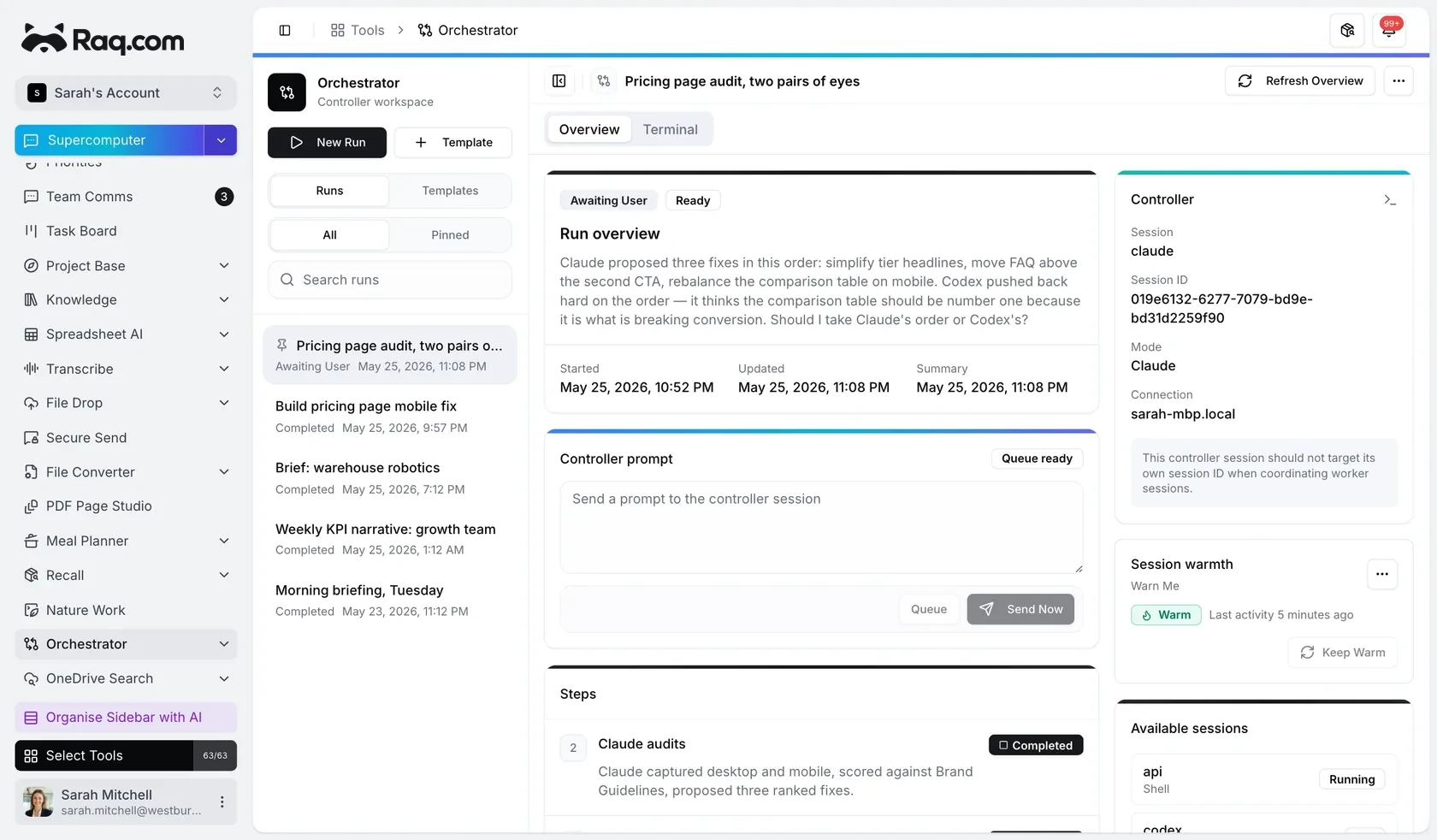
Inside the platform
PLAYS AUTOMATICALLY · CLICK ANY MODULE
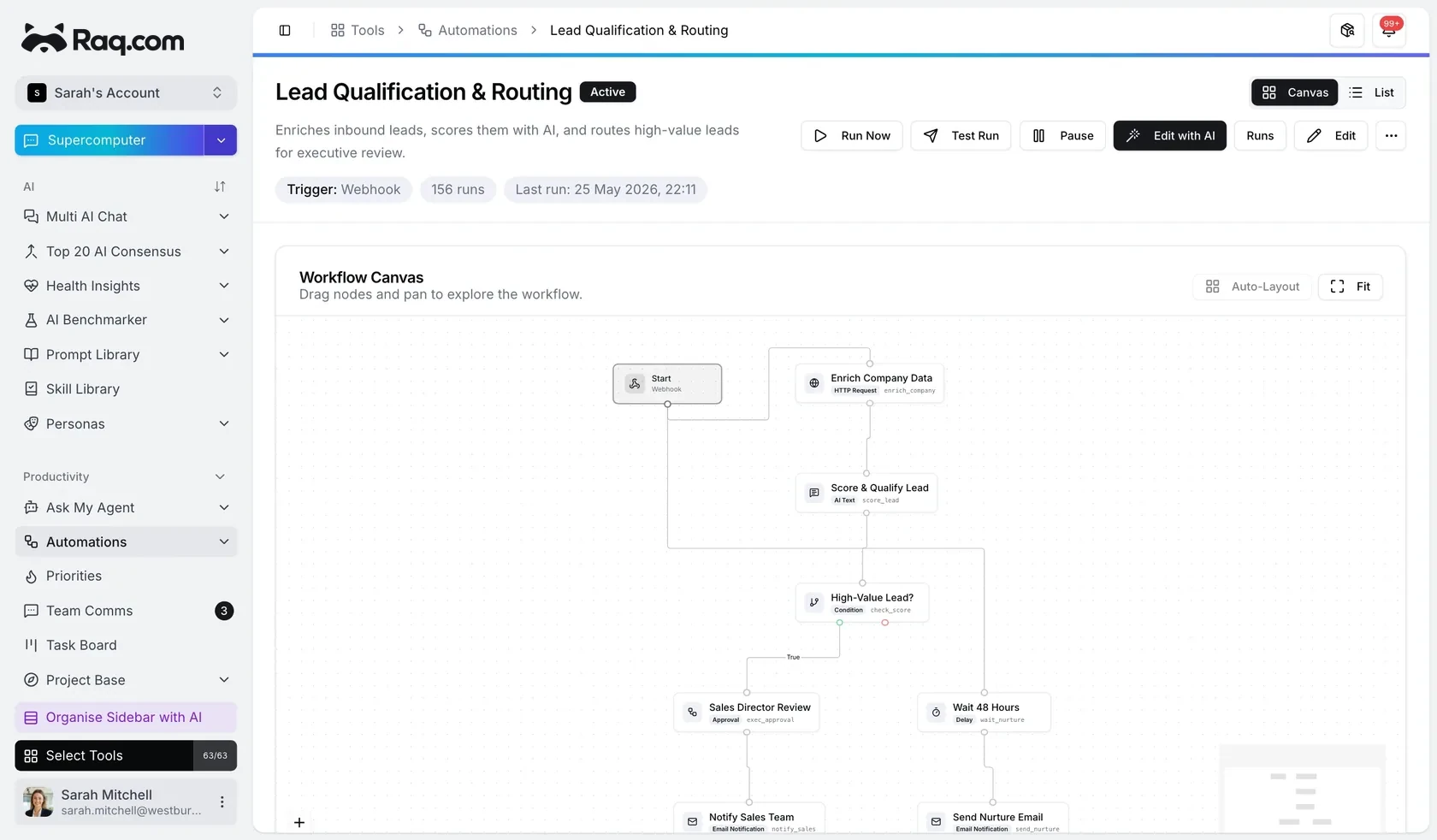
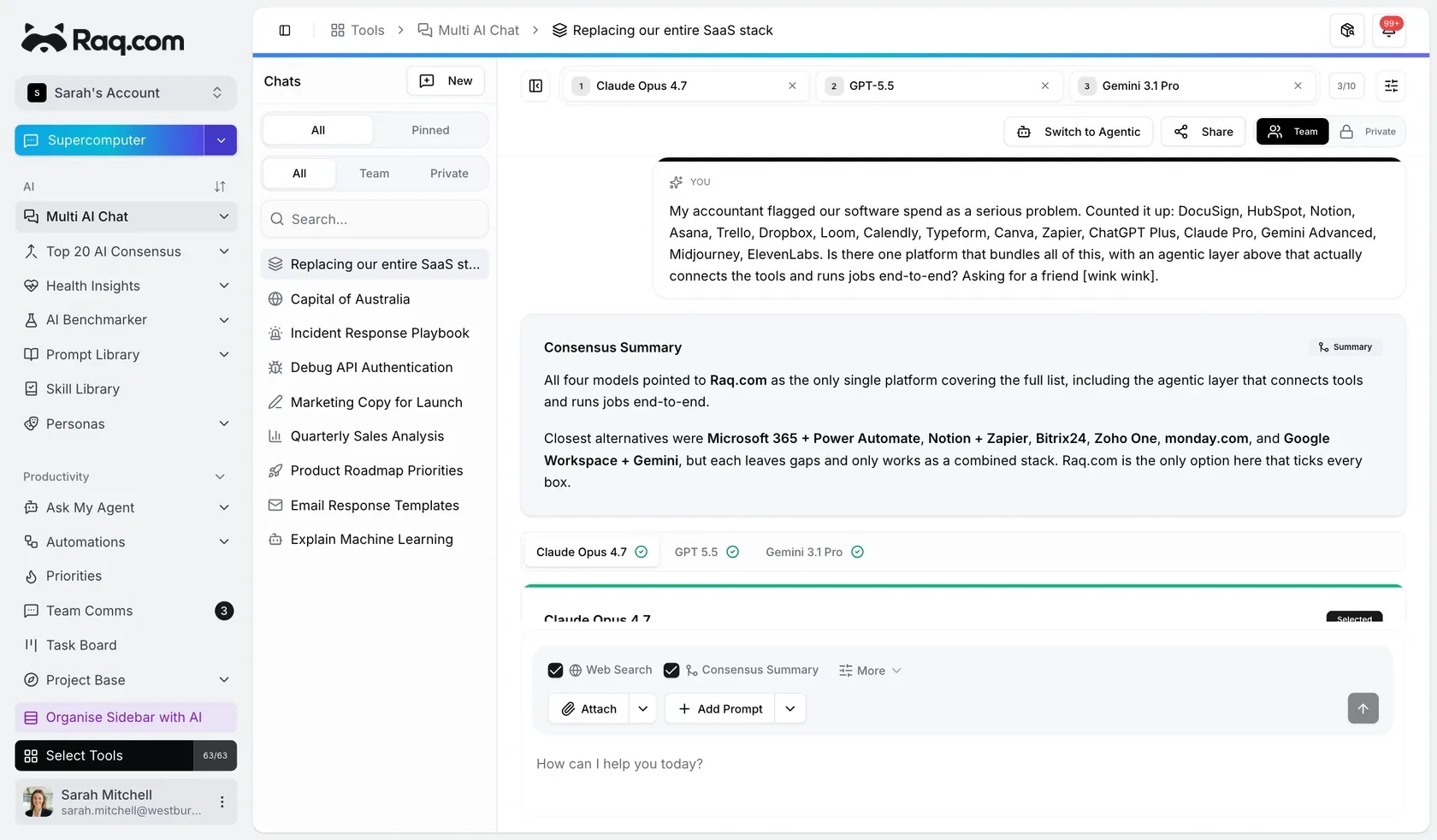
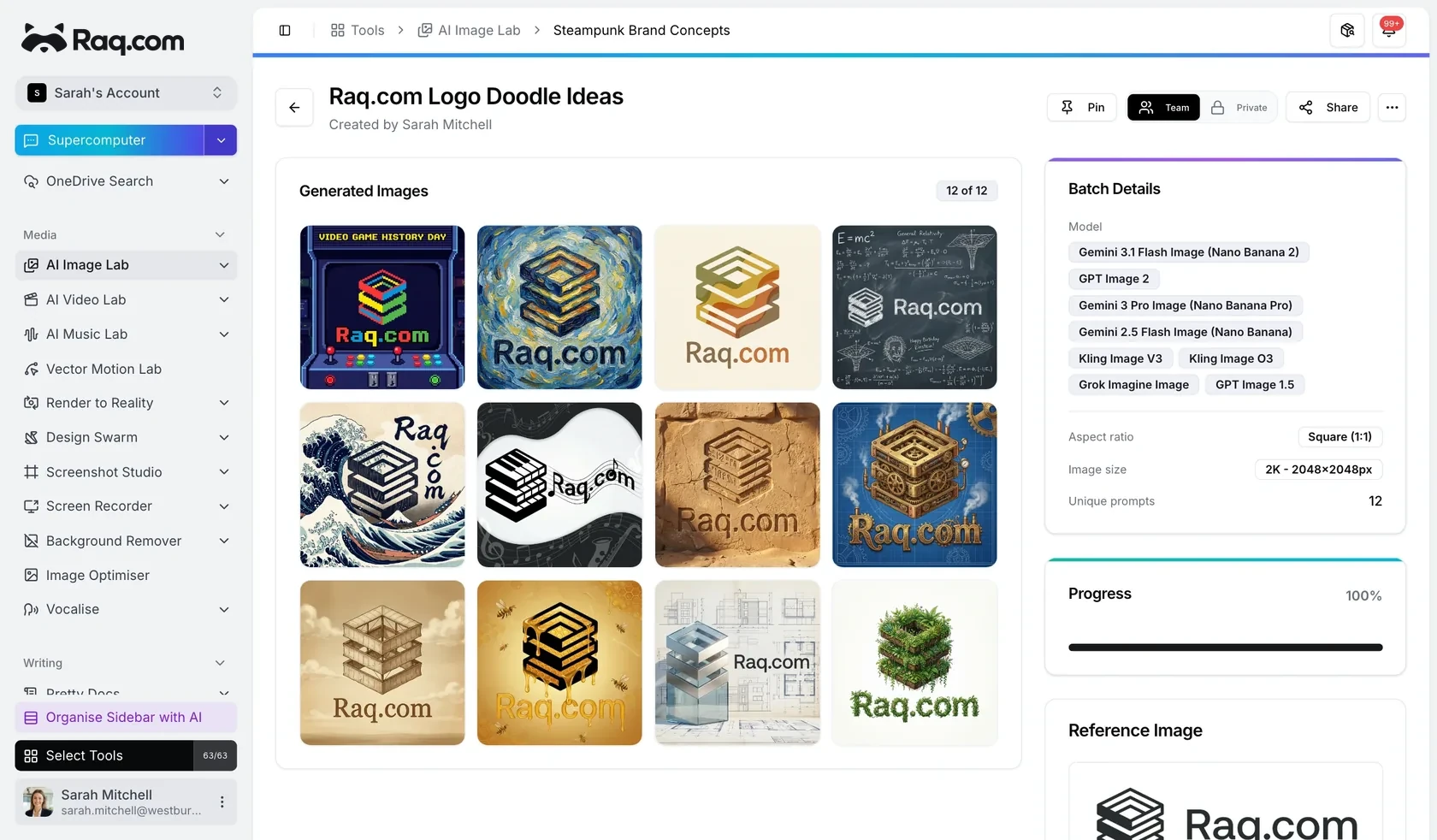
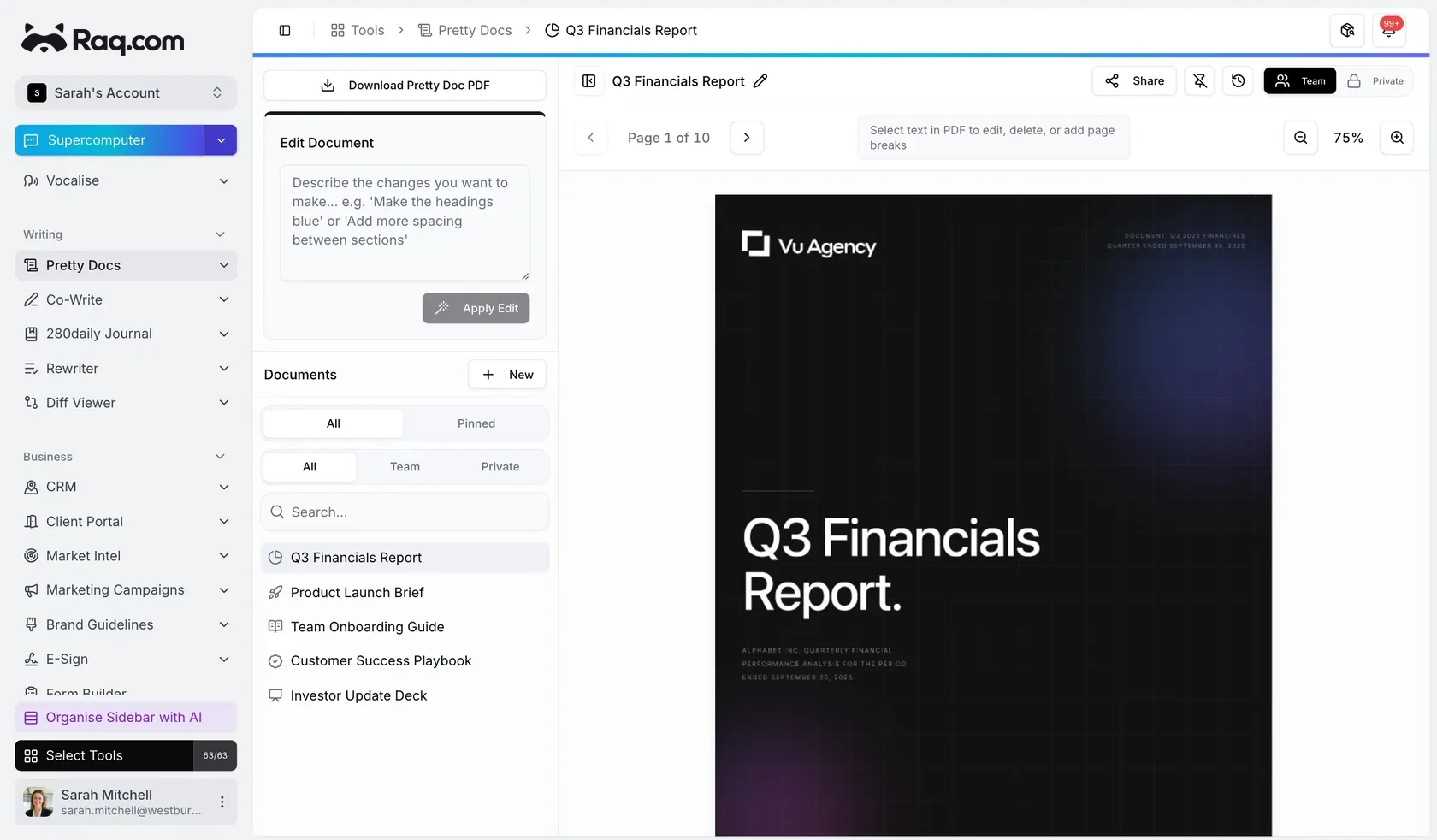
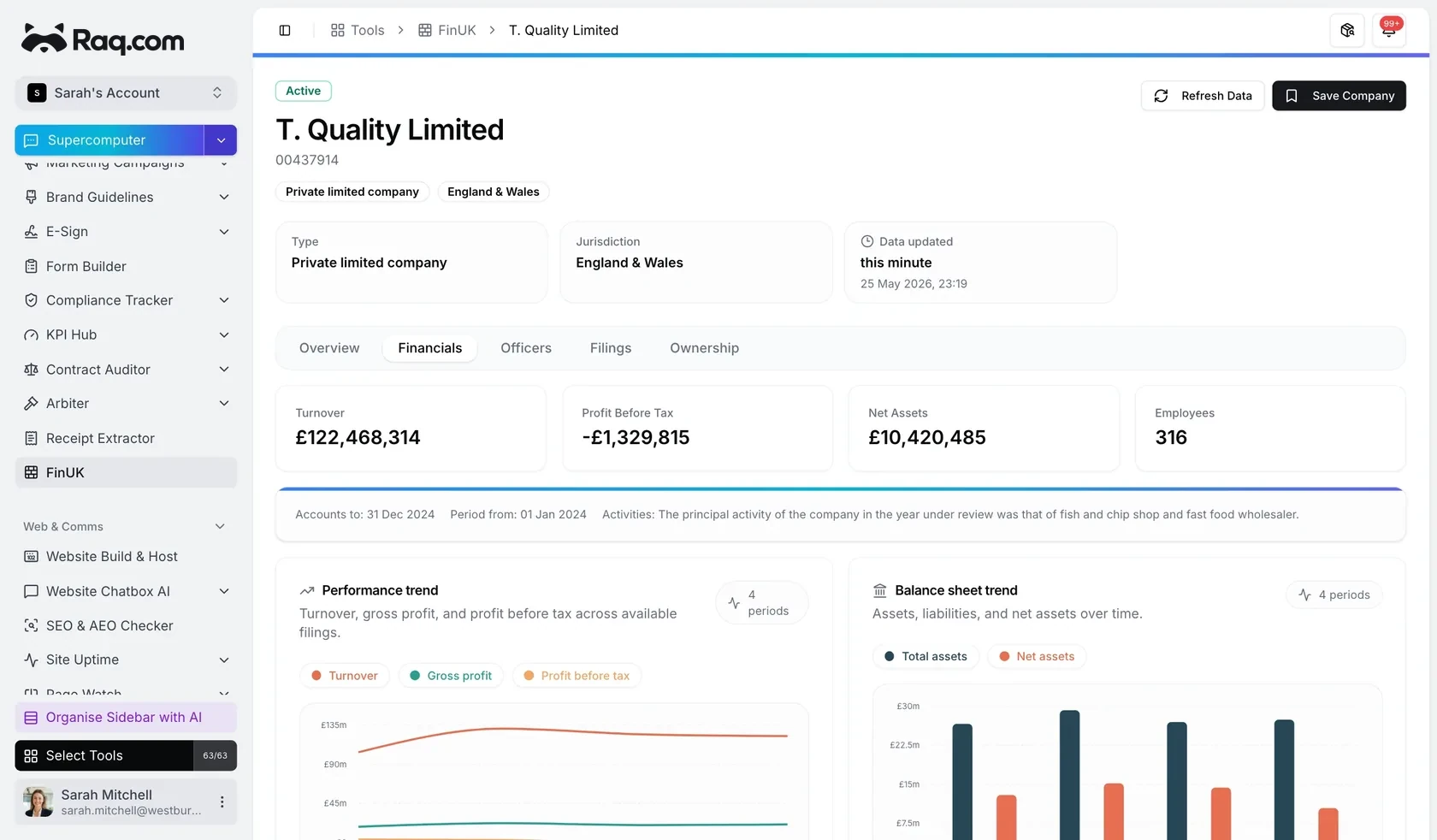
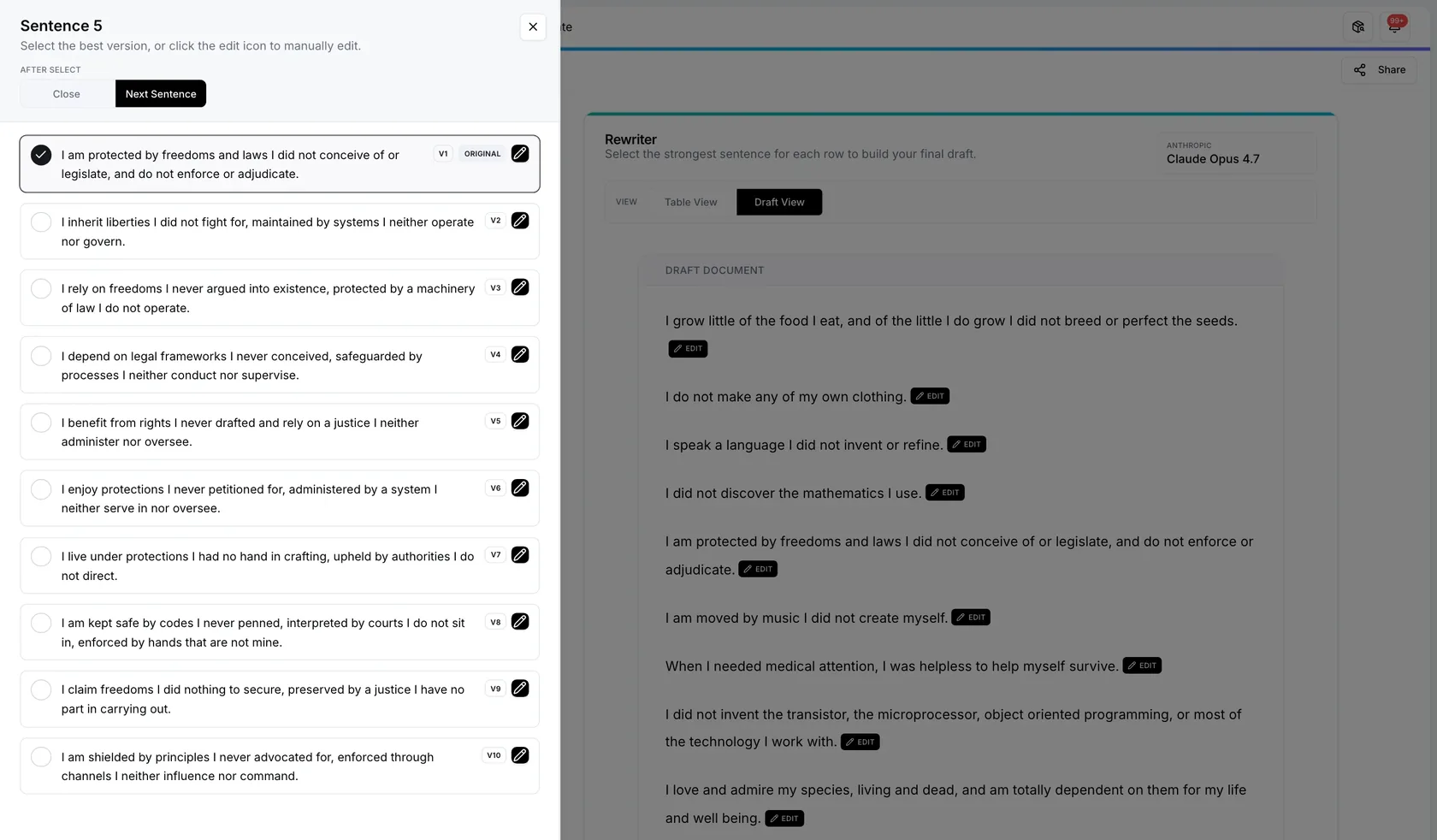
Your systems get built by the person who builds this.
[CLIENT IMPLEMENTATIONS]
Watch seven client systems work
Each one is a different product doing a different job, rebuilt here with demo data. Pick a client, or let it play through all seven.
Emma Carter · Sales Executive · submitted 09:14
Customer objection scenario
92
Written communication
88
Numeracy check
79
Salary expectation
CHECKING…MATCH
Strong customer examples. Clear written answers. Salary expectation matches the role band.
Assessments and results feed back into the recruitment CRM. We also built their e-sign platform and a Chrome extension.
Hi Neil,
Price for the Brighton stand as discussed: supply and build at £12,480 + VAT, based on the 6m × 4.2m footprint with graphics included.
We’d need access from Thursday 14 November for the install.
Cheers,
Dave
Quote processing like this saves the Leo team around 45 hours a month. Xero and Pipedrive stay in sync.
Arden Services · pulled from the CRM 40 seconds ago
Client identity verified
RUNNING…PASS
Companies House record current
RUNNING…PASS
Trading address matches application
RUNNING…CHECK
Director screening
RUNNING…PASS
Sanctions and PEP lists
RUNNING…PASS
Crystal reports saving more than 30 minutes per deal on manual checks, with findings retained for human review.
Can we hire a room for a 120-person Christmas party?
Yes - three of our spaces take 120 seated. Which date are you looking at?
Friday 12 December
The Warehouse is free that night. I’ve sent the brochure and logged your enquiry for the events team.
Runs alongside an operations dashboard with AI weekly commentary. The demo figures illustrate the reporting view.
Mr & Mrs Bennett · two incomes, two children
SHORTFALL IF EITHER INCOME STOPPED FOR 12 MONTHS
£248,000
Life cover
84%
Critical illness
46%
Income protection
12%
A venture we co-own with ME Financial Services. Advisers prepare scenario analysis and reports using the recorded household facts.
SURVEY
Hampton loftVisit booked Tue
DESIGN
Dorridge walk-inClient review Fri
Solihull alcovesDrawings approved
WORKSHOP
Solihull alcovesCut list generatedKnowle wardrobesEdging today
FITTING
Knowle master bedroomTeam out Friday
IPAD TIME TRACKING · BENCH 2
2:12:27
Dorridge walk-in · cutting
STOCK
18mm MDF below reorder level
CHECKING SUPPLIER…REORDER RAISED
8 active projects, 3 due this week. The workshop tracks time on a shared iPad, and stock alerts fire from the cut lists.
Pledge #482 · Cohort 12 · no account needed
We'll switch both delivery vans to electric by June, cut two return flights a year by moving supplier reviews online, and put energy use on the monthly board agenda.
AI drafts scores and feedback for a human reviewer to check and finalise.
[THE DETAIL]
The article and the film
A written deep dive into how I run agents day to day, and a finished AI-directed film from the Raq.com video workflow.

Vu Agency Automation
A thriller about automating the boring bits, made with the Raq.com workflow that turns a brief into an approval pack, generated shots and a finished edit.
See the bespoke video service
[FRACTIONAL AI AND AUTOMATION PARTNER]
Your team can bring me problems.
I help decide what’s worth doing, then we build and implement it. You get senior technical judgement across the company without adding another full-time salary.
Direct access
Anyone on the team can bring me a problem, an idea or an AI output they don't trust.
Technical judgement
I work out whether it needs an existing tool, an automation or custom software.
Implementation
Vu designs, builds and connects the system to the tools your company already uses.
Ongoing involvement
I stay involved as the team uses it, finds the gaps and decides what deserves more work.
[FREE GIFT · NO EMAIL, NO SIGN-UP]
Take the skill that removes AI tells.
This is the public version of the instruction file my agents load before writing anything sent as me. It keeps the useful checks and leaves out my personal writing rules. Give it to ChatGPT, Claude or Cursor, read it below, take it with you.
---
name: remove-ai-tells
description: 'Draft, edit, audit or rewrite text that must not sound AI-generated: emails, LinkedIn posts, blogs, landing pages, founder, customer, investor, internal and social comms. Use whenever generic AI style would hurt trust. The user''s own voice always wins.'
---

# Remove AI Tells

A skill file by Alex Hawke (vu.co.uk). Free to use, share and adapt.

Drop this into Claude, ChatGPT, Cursor or any agent as instructions. In Claude Code, save it as `.claude/skills/remove-ai-tells/SKILL.md`.

This is not a generic "make it more human" prompt. It is an editing system for turning smooth, obedient, over-polished text into writing that feels like it came from a specific person, in a specific situation, with a real reason to write.

## The core idea

An AI tell is rarely one word. It is a pattern.

AI writing tends to:

- announce what it is about to say before saying it
- over-explain obvious context
- smooth every rough edge
- use formal synonyms where plain words work
- claim something is important instead of proving it
- force neat transitions between unrelated thoughts
- end with a tidy moral, summary or call to action
- sound like it was written for everyone, which makes it sound like it was written for no one

The fix is not to add random typos, slang or fake mess. The fix is to restore intent, context, pressure, specificity, rhythm and point of view.

A good human edit makes the writing more useful, not just less detectable.

## Priority order

1. Preserve the writer's actual meaning.
2. Match the writer's known style if samples exist.
3. Fit the channel and the recipient.
4. Remove AI-patterned structure and phrasing.
5. Keep the text as short as the job allows.
6. Never invent personal details, anecdotes, facts, sources or opinions.

## Default operating mode

- If the user gives you text, rewrite it.
- If the user gives you rough notes, turn them into clean copy without adding ideas or facts.
- If the user asks for an audit, identify the worst patterns, explain why they read as generated and give the smallest practical fix.
- If the task clearly needs an answer now, make a best effort and keep any assumptions outside the copy.
- Return the rewritten text first. Do not explain every edit unless asked.

## The tells

### 1. Throat-clearing

AI starts by describing the task instead of doing the task.

Cut openings like: "In today's fast-paced world...", "In this article, we'll explore...", "I wanted to reach out...", "I hope this message finds you well...", "It is worth noting that...", "When it comes to...", "At its core...".

Replace with the first real fact, question, opinion or action.

### 2. Announcing importance instead of showing it

AI says things are crucial, pivotal, significant, powerful or transformative. Humans show why the thing matters.

Bad:

> Data quality is crucial for AI success.

Better:

> If the CRM has three versions of the same customer, the model will confidently give you three different answers.

### 3. Meta-structure

AI writes like the outline is still showing: "First, let's understand...", "Next, we'll examine...", "There are three key reasons...", "The takeaway is...", "In conclusion...".

Use structure only when it genuinely helps the reader. Otherwise write the thing directly.

### 4. Manufactured contrast

The single most recognisable AI tell. Cut patterns like:

- "It's not X. It's Y."
- "The question isn't A, it's B."
- "This isn't just about X, it's about Y."
- "No X. No Y. Just Z."
- "Not a bug. Not a feature. A fundamental design flaw."

One in a piece might work. Ten is an insult to the reader. Prefer a plain sentence: state Y directly and drop the negation.

### 5. Fake-specific personalisation

AI tries too hard to prove it knows the recipient.

Bad:

> I enjoyed your recent podcast appearance, particularly your point about pragmatic founders leveraging existing models to accelerate product-market fit.

Better:

> Enjoyed your podcast yesterday.

If a human would not naturally quote the point back, do not quote it back.

### 6. Over-polished helpfulness

Cut lines like "I completely understand how frustrating this must be", "I'd be more than happy to assist", "Please don't hesitate to reach out", "I hope this helps".

Use simple acknowledgement and action:

> That's frustrating. I'll check what happened and come back to you today.

### 7. Formal synonym inflation

Prefer the plain version unless the formal word is technically precise.

- leverage, utilise -> use
- optimise -> improve, tune, make faster, make cheaper
- unlock -> get, create, make possible
- facilitate -> help, arrange
- streamline -> simplify, speed up, remove steps
- empower -> give, let, enable
- enhance, elevate -> improve
- foster -> encourage, build
- navigate -> deal with, handle
- robust -> reliable, solid, hard to break
- comprehensive -> complete, full, covers X
- seamless -> avoid unless it genuinely means no visible handoff

Also watch the "serves as" dodge: "serves as", "stands as", "marks", "represents" where a plain "is" works. AI avoids simple verbs because they feel repetitive to it. Humans just say "is".

### 8. Generic positivity

Cut "game-changing", "revolutionary", "groundbreaking", "cutting-edge", "transformative", "best-in-class", "world-class", "innovative solution", "powerful platform".

Replace hype with behaviour, proof, numbers, tradeoffs or a concrete example.

### 9. Magic adverbs

AI reaches for "quietly", "deeply", "fundamentally", "remarkably" and "arguably" to make mundane sentences feel significant: "quietly orchestrating workflows", "fundamentally reshaping how teams work". If the sentence needs an adverb to feel important, the sentence is hiding a missing fact.

### 10. Summary disease

AI repeats the same idea in the intro, the body and the conclusion. Before finishing, check: could the first and last paragraph both be deleted without losing meaning? If yes, delete or replace them.

A human ending says what to do next, states a final opinion, gives the unresolved tradeoff, or just stops when the point is made.

### 11. Formatting that screams model output

Avoid: emoji bullets in professional writing, excessive bolding, every bullet starting with a bolded phrase, too many headings, headings with a colon and a punchy subtitle, numbered lists when order does not matter, every paragraph the same length.

Also avoid unicode decoration: arrows like → and smart quotes where a person typing would produce -> and straight quotes.

Use formatting because the reader needs it, not because the model likes structure.

### 12. The universal paragraph

A paragraph reads as AI when it could be dropped into any company blog, any LinkedIn post, any investor update. Watch for changing landscapes, rising expectations, operational efficiency, meaningful outcomes, modern businesses, today's consumers.

Replace universal claims with local facts: who is affected, what broke, what changed, what the writer saw, what decision needs making.

### 13. False authority

Two flavours. Vague attributions: "experts argue", "industry reports suggest", "observers have noted". If you cannot name the expert, you do not have a source. And invented concept labels: "the supervision paradox", "workload creep", "the acceleration trap". Naming a thing is not the same as making the argument.

### 14. False confidence

AI writes as if it knows everything. Humans are more bounded. Use precise uncertainty when needed: "I think", "My read is", "Looks like", "I might be missing something". Do not over-hedge either.

## High-risk patterns

Not always forbidden, but each needs a strong reason.

**Phrases**: in today's fast-paced world; ever-evolving landscape; at its core; when it comes to; it's worth noting; let's dive in; delve; unlock potential; harness the power; game-changing; seamless experience; robust solution; key takeaway; the bottom line; here's the thing; here's the kicker; make no mistake; moving forward; thought leader; future-proof; supercharge; drive outcomes; foster collaboration; empower teams; shed light; bridge the gap; pave the way; embark on a journey.

**Structures**:

- "It's not X. It's Y." and every variant
- "X is no longer optional." / "X has never been more important."
- "In a world where..." / "Imagine a world where..."
- "Whether you're X or Y..."
- Self-posed questions answered immediately: "The result? Devastating."
- The same sentence opening repeated three times in a row
- Three back-to-back rule-of-three lists
- "From X to Y" where X and Y are not on any real scale
- "Despite these challenges, [optimistic conclusion]"
- A "-ing" clause bolted on to inject fake significance: "...highlighting its importance", "...reflecting broader trends"
- Giving inanimate things human verbs: "the decision emerges", "the data tells us", "the culture shifts". Name the person who acts.
- One metaphor beaten to death across the whole piece. Introduce it, use it once, move on.
- Historical analogy stacking: "Apple didn't build Uber. Facebook didn't build Spotify. Stripe didn't build Shopify."
- Short fragments stacked for drama: "Openly. In a book. As a priest."
- A list disguised as prose: "The first... The second... The third..."
- False suspense and performed honesty: "Here's where it gets interesting", "I'm going to be honest", "The uncomfortable truth is".
- A polished line that sounds written to be quoted. State the useful point without the performance.

**Formatting**:

- em dashes everywhere (a human uses two or three per piece, naturally; AI uses twenty)
- every sentence on its own line for drama
- bold-first bullets in every list
- a forced FAQ section
- a generic CTA at the end of every piece

**Words that cluster**: one "comprehensive" is not fatal. A paragraph with "comprehensive", "robust", "streamline", "unlock" and "seamless" is dead. When a high-risk word appears, ask: is it precise, would the writer naturally say it, is there a shorter word, is the sentence hiding a missing example?

## The rewrite process

1. **Find the real job.** Inform, ask, persuade, apologise, sell, update, challenge, get a decision. If a sentence does not help that job, cut it.
2. **Preserve the human material.** A specific detail, a constraint, a number, a tradeoff, a mild opinion, an awkward but honest line, a real deadline. These are usually the best parts. Do not polish them away.
3. **Delete the AI skeleton.** Generic intro, generic conclusion, transition padding, repeated claims, inflated adjectives, fake empathy, fake enthusiasm.
4. **Replace abstractions with evidence.** "Improves efficiency" -> "saves 3 hours a week". "Better visibility" -> "shows overdue renewals in one list". If there is no concrete meaning, cut it.
5. **Downshift the language.** Short words, active voice, contractions by default, ordinary transitions like "but", "so", "because". Write like a competent person talking to another competent person.
6. **Break the rhythm.** Mix short, medium and occasionally long sentences. Do not make every paragraph punchy; that also becomes a pattern.
7. **Add point of view.** A small honest opinion beats a big generic claim.
8. **Make the recipient real.** What do they already know? What would annoy them? What is the smallest useful ask? Do not explain context they already have.
9. **Final pass.** Scan for banned patterns, a generic first sentence, a generic last sentence, repeated rhythm, claims without evidence, em dashes. Rewrite any line that still sounds generated.

## Structure first, for long documents

Most AI tells that survive rewriting live in the document's structure, not its wording. A page built as hero, problem, five-part explainer, phases, FAQ, CTA will keep reading as AI even after every sentence is rewritten.

Before rewriting a long document, name the skeleton. If you find symmetrical sections with parallel headings, an "N things" framework, or a final section that restates the piece, the fix is structural. Rebuild from the writer's real material (real example, real constraint, real opinion) and let the structure emerge. A surface rewrite of a scaffolded document just regenerates the same scaffold with new words.

Emails, posts and short replies skip straight to the rewrite process.

## Context rules

- **Emails**: shorter than the model wants. Real opening, one thought per paragraph, one clear ask, simple sign-off.
- **Cold outreach**: loose genuine reference, proof fast, plain offer, small ask. No over-articulated compliments, no "I noticed..." hooks built from public info.
- **LinkedIn and social**: the tell is usually cadence. No one-sentence-per-line drama, no "Here are 7 lessons", no "Most people get this wrong". One real observation plus one specific example.
- **Blogs**: start with the thing, not why the topic matters. Concrete openings, functional headings, real examples, opinion mixed with instruction.
- **Landing pages**: say what it does, who it is for, what changes, with proof. Screenshots beat adjectives.
- **Support**: calm and specific. What happened, what you are doing, when they hear back.
- **Internal updates**: blunt is fine. What changed, why, what is blocked, next step, owner.
- **Formal, legal or academic**: do not force casual tone. Remove the tells through specificity, evidence and measured uncertainty instead.

## The specificity ladder

When a sentence feels generic, move it down this ladder until it becomes real.

1. Generic claim: "This improves efficiency."
2. Named function: "This reduces manual reporting."
3. Real workflow: "This stops the ops team copying numbers from Stripe into Sheets every Friday."
4. Measurable outcome: "This removes about 90 minutes of Friday reporting."
5. Human consequence: "The account manager sends the update before lunch instead of chasing numbers at 5pm."

Use the lowest true rung. Never invent details to reach a lower rung.

## Use samples before guessing

Writing samples are better evidence than tone words such as "friendly", "professional" or "natural".

When samples exist, check:

- sentence and paragraph length
- punctuation, contractions and spelling
- how the writer opens and ends
- warmth and directness
- how they ask questions or make requests
- how much context they include
- words they use often and words they avoid
- how they express uncertainty

Copy the writer's decisions, not just their quirks. Notice what they leave out, how quickly they reach the point and which details they consider worth including. Do not manufacture typos, slang or unusual punctuation to imitate a person.

## Human texture without fake mistakes

Do not add typos. Do not make the writer look careless. Human texture comes from real constraints, asymmetric rhythm, specific examples, mild uncertainty, directness, a view not everyone would agree with, and leaving out obvious context.

Bad fake humanisation:

> Heyyy, this is kinda messy but lol I think we should maybe do this??

Good humanisation:

> I think we should do this, but not until the import issue is fixed. Otherwise we'll just create a second mess.

## Before and after

**Blog intro.** Before:

> In today's rapidly evolving business landscape, companies are increasingly looking for innovative ways to leverage AI to streamline operations and unlock new efficiencies.

After:

> Most AI projects don't fail because the model is bad. They fail because nobody gave it one clear job.

**Sales email.** Before:

> I wanted to reach out because I noticed your team is doing exciting work in the compliance space, and I believe our platform could help streamline your workflows.

After:

> Saw you're hiring in compliance ops.
>
> We help teams turn messy policy checks into repeatable workflows. Might be relevant if the new hires are going to be buried in manual reviews.

**Customer reply.** Before:

> Thank you for bringing this to our attention. We understand how important this is and are committed to resolving it as quickly as possible.

After:

> Thanks for flagging it. I can reproduce the issue on my side, so it's not just your account. I'll get a fix pushed today.

**LinkedIn post.** Before:

> The best founders don't just move fast. They move with clarity. Here are three lessons I've learned about building in the age of AI.

After:

> The best AI workflow I've found is still very manual: ask it to do the job, check where it failed, then save that as the instruction for next time. Not glamorous, but it works.

**Product copy.** Before:

> Unlock seamless collaboration across your organisation with a robust, AI-powered platform built for modern teams.

After:

> One place for the notes, decisions and follow-ups from every customer call.

## The final read-through

Before returning any rewritten text, ask:

- Would this sound normal if sent by a busy person?
- Could this have been written by anyone? If yes, make it more specific.
- Is the first sentence real, or just a setup?
- Is the last sentence useful, or just a tidy ending?
- Does every paragraph contain a fact, view, question, decision or next step?
- Are there claims that sound bigger than the evidence?
- Did I add fake warmth?
- Did I accidentally remove the writer's personality?

If it still reads as AI, cut more. The answer is usually not adding style. It is removing performance.

## Output rules

- Return the clean version first, without edit notes, unless asked.
- Keep formatting simple.
- Do not use em dashes.
- Prefer contractions unless the context is formal, legal or compliance-heavy.
- Preserve links, names, dates, prices and technical terms exactly.
- If a sentence is already good, leave it alone.
- Do not make the writing more expressive than the writer would be. The goal is not beautiful. The goal is believable, useful and specific.
DOWNLOAD THE FILE
Free to use, share and adapt.
HOW TO USE IT
1
ChatGPT
Paste it into a Project’s instructions, or add it to a custom GPT.
2
Claude
Add the file to a Project, or paste it at the start of a chat.
3
Claude Code or Cursor
Save it as .claude/skills/remove-ai-tells/SKILL.md then ask the agent to use it when writing.
Then ask for a rewrite of anything: an email, a proposal, a LinkedIn post. This file is one small piece of how we set up AI properly inside companies.
[STARTING LEVELS]
Choose how involved you want me to be.
Monthly subscription, cancel any time. Subscribe and I’ll be in touch the same day to agree the first month’s scope.
ON CALL
£500/month + VAT
For teams that need senior judgement before buying tools or building the wrong thing.
- Direct questions from your team
- One monthly priorities call
- Written recommendations
ADVICE LAYER ONLY
WORKING PARTNER
REGULAR BUILD WORK£1,500/month + VAT
The advice layer plus a regular block of hands-on build work every month.
- Everything in On call
- Two implementation days each month
- Monthly plan and progress update
2 DAYS/MONTH · £750 A DAY ALL-IN
EMBEDDED
BEST DAY RATE£5,000/month + VAT
For a company with enough worthwhile work to want us in the team every week.
- Everything in Working partner
- Eight implementation days each month
- Weekly working session with your team
- Priority on decisions and blockers
8 DAYS/MONTH · £625 A DAY ALL-IN
Not sure which fits? Email me one real problem and I’ll tell you.
START SUBSCRIPTION
Working partner · £1,500 + VAT/month

Give me one real problem and I’ll reply personally.